
Victor Lance Vescovo's net worth is estimated at somewhere between $150 million and $400 million as of March 2026, based on publicly available evidence of his private equity career, his ownership of Caladan Oceanic, and his documented involvement in significant investment funds. That range is wide by design, because his wealth is tied almost entirely to private entities, and private wealth is genuinely hard to pin down. Here is exactly what the evidence supports, where the gaps are, and how to think critically about any figure you see attached to his name.
Victor Lance Vescovo Net Worth: Estimate and Sources

Marcus Kellerman
27 Mar 2026
Who exactly is Victor Lance Vescovo?

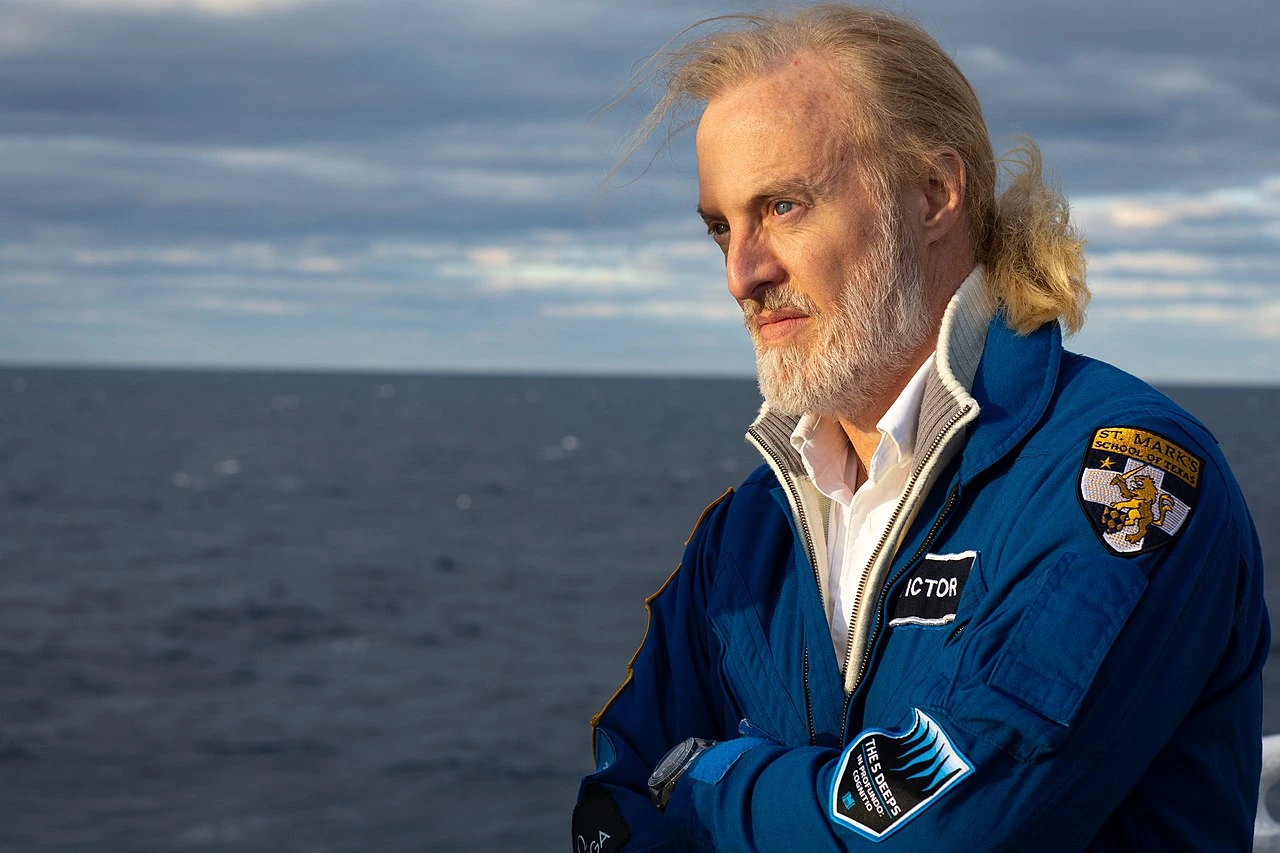
Victor Lance Vescovo is an American private equity executive, former U.S. Navy Reserve officer, and deep-sea explorer. He is best known publicly for leading the Five Deeps Expedition, which reached the deepest point in each of the world's five oceans. That exploration work is documented on Caladan Oceanic's mission page, which describes him as the company's founder and connects him directly to those milestones. The exploration side of his life gets most of the media coverage, but it is his business career that drives his financial profile.
On the business side, SEC filings and Insight Equity's own press materials consistently identify him as a co-founder, Chief Operating Officer, and Managing Partner of Insight Equity Holdings LLC, a Texas-based private equity firm. A July 2005 Insight Equity press release lists him as "COO and Managing Director" when announcing the close of a $250 million fund. Later SEC Schedule 13G/A filings for Emerge Energy Services LP name "Victor L. Vescovo" as a beneficial owner via Insight Equity's control structure, referencing over 10 million common units indirectly held through related entities. More recently, Insight Equity brochure materials describe him as "Co-Founder Emeritus," suggesting a shift from active day-to-day operations while retaining a founding stake.
There is no credible public record of another prominent person named Victor Lance Vescovo in business, exploration, or public life. If you searched this name, you are looking at the same individual: the explorer-turned-private-equity-executive from Texas.
How net worth estimates actually work (and why they differ so much)
Net worth is simple in theory: total assets minus total liabilities. In practice, for someone like Vescovo whose wealth sits inside private funds, private companies, and unreported personal accounts, every estimate involves informed assumptions. No public salary disclosures exist. No stock filings show personal holdings directly (the SEC filings reference indirect beneficial ownership through fund structures, not a personal brokerage account you can read). This is why estimates of Victor Vescovo's net worth vary across reference sites by tens or even hundreds of millions of dollars.
The standard methodology for estimating private equity executive wealth goes like this: start with the known size of funds managed, apply industry-standard management fee rates (typically 1.5 to 2 percent annually) and carried interest rates (typically 20 percent of profits above a hurdle), then estimate the executive's personal ownership share in the management company. Layer on top of that any known asset ownership (like Caladan Oceanic), any equity stakes in portfolio companies revealed through regulatory filings, and any publicly reported personal expenditures. What you get is a range, not a number.
Where his money likely comes from

Private equity career at Insight Equity
This is almost certainly the primary driver of Vescovo's wealth. Insight Equity manages middle-market private equity funds with significant capital commitments. The 2005 press release documents a $250 million fund close, and later news materials reference approximately $280 million in capital for purchases under a fund described as the "Southlake Equity Fund.
" Co-founders and managing partners of firms this size typically accumulate wealth through two streams: carried interest paid out when portfolio companies are sold at a profit, and management fee income earned annually on committed capital.
Wikipedia’s overview of carried interest describes how it is commonly paired with management fees in private equity, with management fees often around the 1%, 2% range, which provides context for “2 and 20” discussions carried interest paid out when portfolio companies are sold at a profit, and management fee income earned annually on committed capital.
An blank" rel="noopener noreferrer">NBER working paper also discusses conventional private equity “2 and 20” compensation and carried interest structures, which is relevant background for how these income streams are modeled for executives two streams: carried interest paid out when portfolio companies are sold at a profit, and management fee income earned annually on committed capital.
Over a career spanning more than two decades in this role, those streams can compound substantially.
Ownership of Caladan Oceanic
Caladan Oceanic is explicitly described on its own website as "a private maritime technology development company owned by Victor Vescovo." The company owns the submersible and the support vessel used in the Five Deeps Expedition. These are not cheap assets. A research-grade submersible capable of reaching full ocean depth (approximately 11,000 meters) costs tens of millions of dollars to build and operate. Vescovo is listed as CEO and Owner on Caladan's team page. The company's asset value is private and unaudited from a public perspective, but ownership of custom deep-sea technology hardware and a purpose-built support ship represents a meaningful balance sheet entry.
Equity stakes in portfolio companies

The SEC Schedule 13G/A filing for Emerge Energy Services LP shows Victor L. Vescovo as an indirect beneficial owner of over 10.4 million common units through Insight Equity's control entities. Emerge Energy Services was a publicly traded master limited partnership focused on frac sand production. While that investment has since changed form, it illustrates that Vescovo's equity exposure extended into publicly traded vehicles, at least indirectly, through the fund structure. Similar positions likely exist or existed across Insight Equity's broader portfolio.
Military career
Vescovo served as a Naval Reserve officer, reaching the rank of Commander. Military reserve compensation is relatively modest compared to private equity earnings and would not be a significant driver of total net worth. It is worth noting only for completeness.
Assets, ventures, and ownership stakes that shape the picture

| Asset / Venture | Ownership Type | Public Evidence | Estimated Contribution to Net Worth |
|---|---|---|---|
| Insight Equity Holdings LLC (co-founder stake) | Private equity management company equity | SEC filings, Insight Equity press releases, brochure materials | High (primary wealth driver) |
| Insight Equity funds (carried interest / LP stake) | Fund-level profit participation | SEC Schedule 13G/A filings, press releases | High (realized over fund cycles) |
| Caladan Oceanic (full ownership) | Private company, CEO and sole owner | Caladan Oceanic website, company materials | Moderate (specialized asset, illiquid) |
| Emerge Energy Services LP units (indirect) | Indirect beneficial ownership via Insight entities | SEC Schedule 13G/A | Variable (tied to public market price at exit) |
| Personal real estate / other personal assets | Presumed personal ownership | No public documentation found | Unknown |
The most important takeaway from this table is that essentially all of Vescovo's documented wealth sits inside private structures. None of it is directly visible through public stock disclosures or property records that are easily aggregated. The Caladan Oceanic assets are real and documented but are specialized maritime technology equipment, which is illiquid and difficult to value without a buyer in hand.
Liabilities, spending, and what the numbers don't show
Exploration at the scale Vescovo has pursued is not cheap. Designing, building, and operating a full-ocean-depth submersible, plus a dedicated support ship, requires ongoing capital. While Caladan Oceanic is described as a private company (meaning Vescovo absorbs costs privately), operating costs for these vessels run into millions of dollars annually. Expedition logistics, crew salaries, maintenance, and eventual vessel replacement are all real liabilities against the asset value of the hardware.
On the private equity side, it is standard for managing partners to have personal capital committed to the funds they manage, which means Vescovo's own money is likely locked up in illiquid fund positions with multi-year holding periods. This is not debt in the traditional sense, but it does mean his liquid net worth (cash and equivalents he could access quickly) is almost certainly a fraction of his total estimated wealth. Any meaningful business borrowing at the fund level would also affect the real picture, and those details are private.
There is no public record of personal debt, legal judgments, or financial distress associated with Vescovo. That absence of negative evidence is not the same as confirmation of clean financials, but it is consistent with what you would expect from a long-tenured private equity executive with no high-profile business failures on record.
How to verify claims and spot bad sources
If you want to do your own due diligence on any net worth figure you find, here is a practical checklist. The most reliable sources for someone in Vescovo's position are SEC EDGAR filings (searchable by name or entity), official company websites (Caladan Oceanic and Insight Equity both publish factual information about his roles), credible financial press coverage (The Wall Street Journal, Bloomberg, Dallas Morning News business section), and verified biographical sources used in major documentary or press profiles of the Five Deeps Expedition.
- Check SEC EDGAR directly at sec.gov: search for "Victor Vescovo" or "Insight Equity Holdings" to find original filings, not summaries.
- Cross-reference Caladan Oceanic's official website for ownership and role claims, since it is a primary source.
- Read Insight Equity's own press releases and any available fund closing announcements to understand fund size history.
- Treat celebrity net worth aggregator sites with skepticism unless they cite primary sources: most copy each other and rarely update.
- Look for dated press coverage: articles from 2019 through 2021 covering the Five Deeps Expedition frequently include background on his business career.
- Note the date of any estimate you find: figures from 2022 or earlier may not reflect current fund exits, new investments, or changes in Caladan Oceanic's activity.
- Avoid sources that claim a single precise number (like "$150,000,000 exactly") without explaining how they arrived at it.
One specific red flag: some net worth sites list figures for Vescovo that appear to be copied from a single early estimate and never updated. Given that private equity wealth can change substantially when a fund exits a major portfolio company, static numbers from several years ago should be treated as floor estimates at best. For context on how those earlier figures were framed, earlier estimates from 2020 were often lower and based on less complete public information about his ownership roles.
A realistic net worth range for March 2026
Pulling everything together, here is how the estimate breaks down. This breakdown also explains why people frequently search for Victor Scotto net worth alongside other estimates tied to his private equity and asset ownership. If you are comparing investor profiles, you may also want to see how estimates for other private equity figures, like Victor Scotto net worth, are built from the same mix of fund activity and disclosed ownership.
Vescovo co-founded and served as COO and Managing Partner of Insight Equity, which has managed funds in the range of $250 million to $280 million or more per fund cycle. A managing partner in a successful middle-market PE firm with this tenure would typically accumulate carried interest and management company equity worth $100 million to $300 million or more over two-plus decades, depending on fund performance and personal ownership percentage.
Add to that the hard asset value of Caladan Oceanic's submersible and support ship (conservatively in the $50 million range for custom deep-sea hardware and a purpose-built vessel), and you reach a total gross asset figure that supports a net worth range of $150 million to $400 million.
The lower end of that range applies if fund performance was modest, if Vescovo's personal ownership stake in the management company is smaller than typical for a co-founder, and if Caladan Oceanic's operating costs have consumed significant capital. The upper end applies if Insight Equity's funds have performed strongly across multiple cycles and if his co-founder equity in the management company is substantial. Both ends are plausible given what is publicly known. A single-number estimate of roughly $200 million to $250 million is the most defensible midpoint given available evidence as of today.
This site will update this estimate when new public information becomes available, including any Insight Equity fund closes, portfolio company exits covered in financial press, changes to Caladan Oceanic's ownership or operational status, or any other primary-source evidence that materially changes the picture. If you are researching this topic for professional or academic purposes, the SEC EDGAR filings and official Insight Equity disclosures are the right starting point, not aggregator sites.
FAQ
Why does the estimated net worth of Victor Lance Vescovo vary so much between sources?
Because most of the relevant value sits in private equity structures, where the key drivers (carried interest payouts, management company equity percentage, and fund-level debt) are not fully disclosed publicly. Aggregators often fill gaps with assumptions that can swing the result by tens to hundreds of millions, especially if they rely on an older, single snapshot rather than later fund exits.
Is Victor Vescovo’s net worth the same as his liquid wealth (cash he can access quickly)?
Not necessarily. With private equity, personal capital is typically locked in illiquid fund interests and may not be freely transferable. His “net worth” may be high even if liquid assets are a small fraction of the total, so cash availability would require separate evidence like disclosed borrowing, tax-related liquidity events, or public balance-sheet details (rare for private structures).
How much do management fees vs carried interest usually contribute for someone in Vescovo’s role?
In many middle-market PE setups, management fees provide steadier income but carried interest is often the main upside driver when exits occur. The article discusses both, but the practical implication is that net worth estimates depend heavily on how many major portfolio exits happened on favorable terms and what portion of those distributions reached the managing partner over time.
Do SEC filings directly reveal how much personal money Victor Vescovo owns?
They can indicate indirect beneficial ownership through fund or control structures, but they usually do not show a personal brokerage account style view. To translate filings into a personal stake estimate, you typically need the management company ownership structure and how the units are held and distributed, which are often not fully spelled out in a single filing.
Could Caladan Oceanic’s assets inflate net worth if the company has large liabilities or ongoing costs?
Yes. The hardware and vessel values are meaningful, but operating expenses, maintenance, crew costs, and any debt or lease obligations reduce net equity. Without audited statements, estimates often treat asset presence as value, but net worth should be viewed as assets minus liabilities, not just equipment replacement cost.
What if Insight Equity or Caladan Oceanic changed ownership, roles, or structure after earlier estimates were published?
Then older net worth numbers can become misleading. The article notes timing risk (static figures copied from earlier estimates). A practical check is to look for newer SEC filings for entities tied to Insight Equity and any updated “owner” or “founder” language on Caladan Oceanic’s team or governance pages.
Is there any reliable way to estimate the value of a custom deep-sea submersible and support vessel?
You can approximate replacement cost and then adjust for depreciation, refurbishment needs, and market resale difficulty. For specialized technology, resale comparables may be limited, so “what it costs to build” can exceed “what a buyer would pay,” which is why conservative estimates may discount the asset relative to replacement value.
Could Vescovo’s military reserve rank affect the net worth estimate?
In most cases, it should be treated as a minor factor. Reserve officer pay is generally small compared with private equity economics, so even if included, it would likely not materially change a large, private-structure-based net worth range.
How can I do due diligence without relying on net-worth aggregator sites?
Start with SEC EDGAR searches for Vescovo and related Insight Equity entities, then cross-check official Insight Equity and Caladan Oceanic materials for role and ownership language. After that, focus on credible financial press for fund closes, major exits, and material changes that would alter carried interest distributions.
What are common mistakes people make when estimating net worth for private equity executives like Vescovo?
One mistake is treating reported fund size as personal wealth without accounting for fee rates, carried interest structure, personal ownership percentage, and timing of distributions. Another is ignoring liquidity, assuming assets are immediately monetizable, or double-counting the same economic interest across funds and vehicles.
What would be a “decisive update” that could push the estimate higher or lower?
Major portfolio exits that trigger large carried interest distributions would tend to move the estimate upward. On the downside, evidence of significant fund-level losses, changes in his retained equity percentage, or new information showing substantial personal or company-level debt would tend to reduce the credible upper bound. For Caladan Oceanic, audited financials or documented financing arrangements would also meaningfully shift the range.
Next Articles
Victor Vescovo Net Worth: Estimated Range and Sources
Victor Vescovo net worth estimate range, sources like Forbes, and why private assets and methods change the figure.

Victor Alcantara Net Worth: How to Estimate It Accurately
Estimate Victor Alcantara net worth accurately by identifying the right person and using contracts, profiles, and assets

Victor Oliveira Net Worth: How It’s Estimated and Verified
Learn how victor oliveira net worth is estimated using verifiable earnings, contracts, prizes, endorsements, and how to