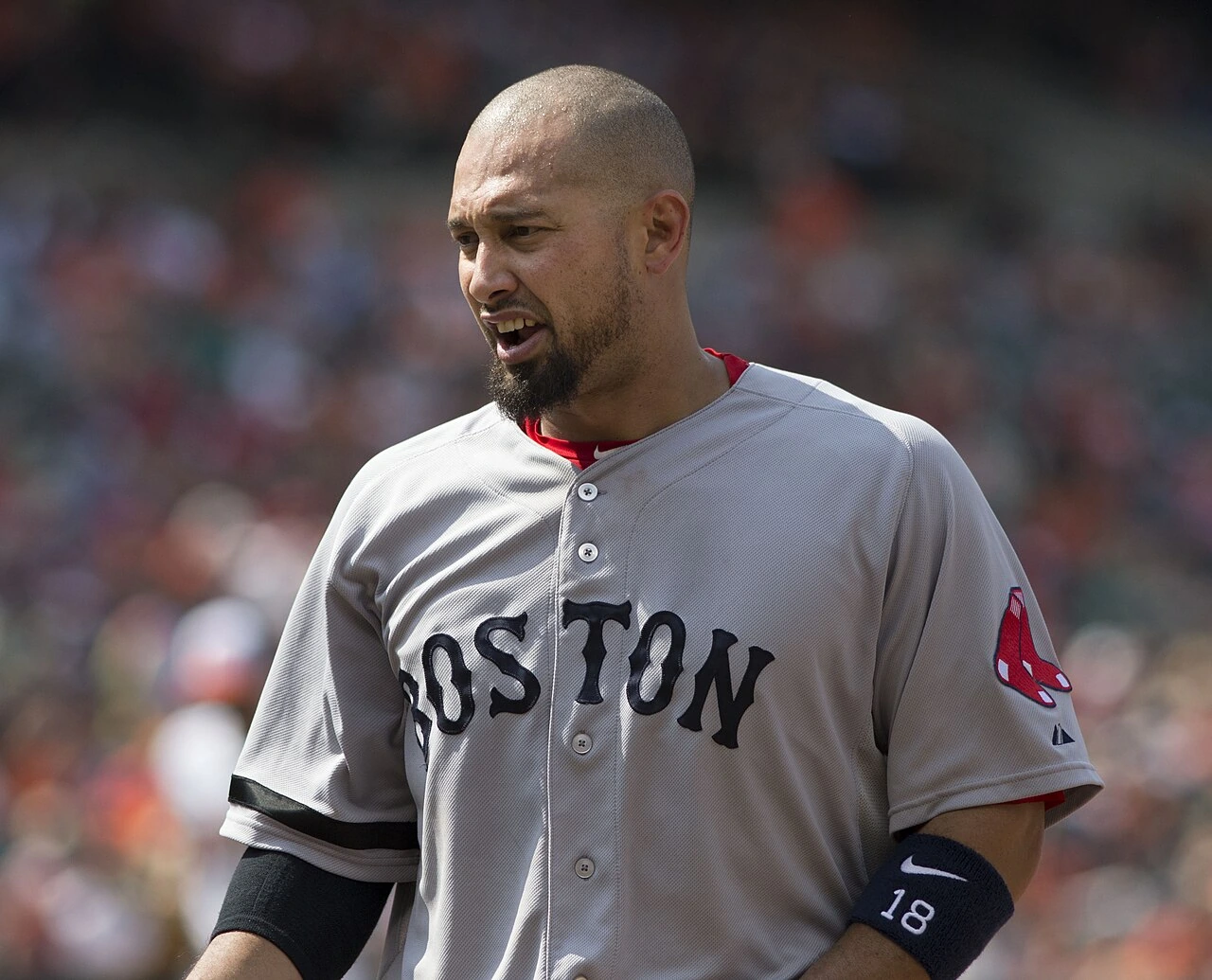
Quick answer: Shane Victorino's estimated net worth

Shane Victorino's estimated net worth as of April 2026 is approximately $35 million. That figure appears consistently across the most widely cited celebrity wealth aggregators, including CelebrityNetWorth, and aligns with Sportskeeda's 2022 estimate of the same number. The underlying foundation for that estimate is his documented MLB career cash earnings of roughly $65.5 million (per Spotrac's cumulative contract database), reduced by taxes, agent fees, living expenses, and offset by any remaining investments, business activities, and charitable commitments. It is an estimate, not a certified balance sheet, but $35 million is the most credible publicly available figure and a reasonable working number for research purposes.
Who Shane Victorino actually is
Quick disambiguation note for readers arriving from elsewhere on this site: this article is specifically about Shane Patrick Victorino, the MLB outfielder from Wailuku, Hawaii, not any other Victor or Viktor-named figure documented here. While this site covers a wide range of notable people sharing those names, Victorino falls into the sports category alongside athletes like Victor Ortiz and Victor Martinez. If you are comparing net worth figures across sports, our guide on the Victor Ortiz boxer net worth can help you interpret the numbers the same way athletes like Victor Ortiz.
Victorino was born on November 30, 1980, and played professional baseball from 2003 through 2015 (with a brief comeback attempt in 2016). He is best known as the 'Flyin' Hawaiian,' a nickname earned for his speed, hustle, and Hawaiian heritage. Here is his career timeline in brief:
- 2003: MLB debut with the San Diego Padres after years in the minor league system originally developed by the Los Angeles Dodgers
- 2004–2011: Philadelphia Phillies, where he became a fan favorite and won a World Series ring in 2008
- 2012: One season with the Los Angeles Dodgers
- 2013–2014: Boston Red Sox under the three-year, $39 million contract, winning another World Series ring in 2013
- 2015: Returned to the Dodgers but played limited games due to injuries
- 2016: Signed a minor-league deal with the Chicago Cubs with a $1 million base salary if he made the roster and up to $1 million in additional performance bonuses, but did not make the major league club
- Post-playing career: Charitable work through the Shane Victorino Foundation, golf, and business activities in Hawaii
He is a four-time Gold Glove Award winner and two-time All-Star, which puts him solidly in the category of above-average MLB earners without reaching superstar contract territory. That career arc matters a lot when you are trying to understand where the $35 million figure comes from.
How the $35 million estimate is built

Net worth estimates for athletes like Victorino are constructed by starting with documented career earnings and then applying reasonable deductions. Here is how each major income category breaks down:
MLB salary (the biggest number)
Spotrac's player page lists Victorino's total career cash at $65,494,999. This is the most granular public record available and is the anchor figure for any serious net worth estimate. His highest-earning years were 2013 and 2014 with the Red Sox, when his annual cash salary reached approximately $13 million per season. The Red Sox deal alone (three years, $39 million) accounts for more than half of his total career earnings. MLB.com reported that the Red Sox signed Shane Victorino to a three-year contract through the 2015 season. His 2015 salary with the Dodgers included approximately $11.8 million in cash for that year, though injuries severely limited his playing time.
Signing bonuses and incentives
Spotrac's data includes a signing/incentives line of $150,000 in its breakdown, which reflects the smaller incentive structures common in his early and mid-career contracts. The Cubs minor-league deal in 2016 was structured with a $1 million base (conditional on making the roster) plus up to $1 million in performance bonuses, but since Victorino did not make the Cubs' major league roster, this likely contributed little or nothing to his final career totals. The Chicago Sun-Times reported on Feb. 26, 2016, that Victorino’s Cubs minor-league deal included $1 million if he made the big-league club plus another possible $1 million in performance bonuses $1 million base plus up to $1 million in performance bonuses.
Endorsements and outside income
Victorino never had the kind of megabrand endorsement deals associated with players like Derek Jeter or David Ortiz, but he was a recognizable personality, particularly in Philadelphia and Hawaii. His purchase of a billboard in Philadelphia is a documented example of a real-world business transaction, though it reflects spending rather than income. His work with the Shane Victorino Foundation (where he serves as president, alongside his wife Melissa as co-founder) is charitable in nature and does not generate personal income, though it does reflect ongoing financial engagement and community visibility. Specific endorsement dollar amounts are not publicly documented, so estimates in this category involve the most uncertainty.
Deductions that bring $65M down to $35M

The gap between roughly $65 million in career earnings and a $35 million net worth estimate is explained by a combination of factors: federal and state income taxes (which for high-earning athletes in states like California and Massachusetts can consume 45 to 50 percent of gross income), agent and representation fees (typically 4 to 5 percent of MLB contracts), living costs over a 13-year career, and any business investments or real estate holdings that may not be fully liquid. The math is roughly consistent: apply a blended effective tax and fee rate, subtract living expenses, and a $35 million net worth from $65 million in gross earnings is plausible, not generous.
What moves the number up or down over time
Net worth is not static, and for a retired athlete like Victorino, several factors can shift the figure meaningfully in either direction.
- Investment performance: If the $35 million estimate includes real estate or equity holdings in Hawaii or elsewhere, market fluctuations affect the figure directly. Hawaii real estate has historically appreciated over time, which could push the number higher.
- Business ventures: Post-career business activity is not well-documented publicly, but any new income streams or business losses would change the estimate.
- Charitable spending: Victorino's foundation involves real financial commitments. Charity events and donor activities documented in Hawaii news coverage show ongoing engagement, and personal contributions to foundation operations would reduce liquid net worth.
- Ongoing living and family expenses: With no active playing salary since 2015, the estate is no longer growing from baseball income. Without significant passive income, the figure can erode over time.
- Tax and legal changes: Changes in federal or state tax law, or any undisclosed legal matters, could affect the figure in ways that are not visible from public data.
Career earnings vs. net worth vs. annual income: knowing which number you're looking at
One of the most common points of confusion when researching a figure like Shane Victorino is conflating three very different numbers. Here is a clear breakdown of what each term actually means:
| Term | What it means | Victorino's figure | Reliability |
|---|
| Career earnings | Total gross salary and bonuses paid over a playing career, before taxes and fees | ~$65.5 million (Spotrac) | High — contract data is publicly filed |
| Net worth | Estimated total assets minus total liabilities at a point in time, after all deductions and accounting for investments | ~$35 million (estimated) | Moderate — based on inference, not disclosed financials |
| Annual income | Current yearly income from all sources (salary, investments, business, etc.) | Not publicly documented post-retirement | Low — no public data available |
When you see a headline saying 'Shane Victorino earned $65 million,' that is career gross earnings. Victorino’s name is also commonly searched alongside the related “Victor González Herrera net worth” query, though that refers to a different person. When a site says his net worth is $35 million, that is an estimate of what he currently holds after a decade-plus of spending, taxes, and financial activity.
For context, the Victor Martinez bodybuilder net worth question follows a similar pattern: estimates typically tie together documented income sources with reasonable assumptions about spending, taxes, and investments net worth is $35 million. If you are specifically looking for the victor fontanez net worth figure, compare it against how net worth estimates are calculated from career earnings, taxes, and spending.
If you are specifically looking for the victor antonio net worth figure, use the same approach of comparing documented income sources with spending, taxes, and asset holdings victor fontanez net worth. Neither number is wrong, but they measure entirely different things. If you are comparing Victorino to other athletes, make sure you are comparing the same type of figure.
Looking at other athletes in this site's coverage, similar distinctions apply: gross career earnings for a professional boxer like Victor Ortiz look very different from actual net worth once training costs, management fees, and lifestyle expenses are factored in.
Where to check the data yourself
If you want to verify or replicate this estimate independently, here are the most useful public sources and what each one gives you:
- Spotrac (spotrac.com): The most detailed public database for MLB contract history. Victorino's player page shows year-by-year cash figures, incentive structures, and cumulative totals. This is the best starting point for career earnings data.
- Baseball Reference (baseball-reference.com): Provides salary data alongside performance statistics, useful for cross-referencing Spotrac figures and understanding how performance related to contract value.
- CelebrityNetWorth (celebritynetworth.com): Provides the $35 million estimate with a general methodology note. Treat this as a cross-check, not a primary source, since the site does not disclose its calculation methodology in detail.
- ProPublica Nonprofit Explorer (projects.propublica.org/nonprofits): Lists the Shane Victorino Foundation's IRS filings (Form 990 data), which are public record. These show organizational finances, not personal wealth, but they do help map out his financial commitments and organizational role.
- MLB.com transaction and contract news: Official MLB transaction records and archived news items document contract signings, terms, and amendments, including the Red Sox deal and the Cubs minor-league agreement.
- ESPN and major sports wire archives: Useful for confirming contract details reported at the time of signing, including bonus structures and conditional clauses.
To replicate the estimate yourself: pull the cumulative cash figure from Spotrac, apply a rough 45 to 50 percent combined tax and fee reduction to approximate after-tax take-home over his career, subtract a reasonable estimate for living expenses over 10-plus post-rookie years, and add back any visible asset holdings. You will end up somewhere in the $30 to $40 million range, which is consistent with the $35 million consensus figure.
Why different sites give you different numbers
If you have searched this topic and seen figures ranging from $20 million to $40 million, that range reflects genuine uncertainty in the estimation process, not necessarily sloppy research. Here is why estimates diverge:
- Different tax rate assumptions: A site assuming a 40 percent effective rate will produce a higher net worth than one assuming 50 percent. Both are defensible depending on state residency history and deduction assumptions.
- Different career earnings baselines: Some sites use only base salary figures and miss incentive payouts or postseason bonuses. Others use higher estimates that include all cash components. Spotrac's $65.5 million figure is the most granular available.
- Inconsistent update cycles: A site that calculated Victorino's net worth in 2018 and never updated it will show a figure that does not account for post-career financial activity. Sportskeeda's estimate is labeled 'as of 2022,' meaning it could already be three or four years out of date depending on investment activity.
- Undisclosed assets and liabilities: Real estate holdings, private business stakes, and personal debt are not public record. Sites that assume all retained earnings became liquid assets will show higher numbers; more conservative assumptions produce lower ones.
- No verified disclosure: Unlike public companies, private individuals do not file balance sheets. Every net worth figure for Shane Victorino, including the $35 million cited here, is an informed estimate, not a verified fact.
The honest confidence level here is moderate. The career earnings figure of roughly $65.5 million has high confidence because it is based on filed contract data. The $35 million net worth estimate has moderate confidence because it is consistent across multiple independent sources and the underlying math is plausible, but it has not been confirmed by Victorino or any verified financial disclosure. Treat it as the best available estimate rather than a precise figure, and check the source dates on any site you consult, since retired athletes' financials can shift meaningfully over a few years without generating any public coverage.