
Based on publicly available evidence as of May 2026, Sir Victor Uwaifo's net worth is best estimated in the range of $1 million to $5 million USD. That range reflects a long, commercially successful career spanning record sales, live performances, visual art, academic work, and business ventures, while honestly acknowledging that no primary financial disclosures exist and that much of his wealth was accumulated in Nigerian naira across several decades of currency fluctuation. Any single number you see cited online should be treated as an informed guess, not a documented figure.
Victor Uwaifo Net Worth: What We Can Know Reliably

Marcus Kellerman
21 May 2026

Who Sir Victor Uwaifo was (and why this net worth question deserves a careful answer)
Victor Efosa Uwaifo was born on 1 March 1941 and passed away on 28 August 2021. He was one of Nigeria's most decorated creative figures: a highlife and juju guitarist, songwriter, sculptor, musical instrument inventor, university lecturer, and Nigeria's first Honorable Commissioner for Arts, Culture and Tourism. UNESCO named him a Human Living Treasure in 2017, and he received Nigeria's National Honours Merit Award in 1983 as a Member of the Order of the Niger (MON). His signature song 'Joromi,' released on Phonogram in 1966, sold 100,000 copies by 1969 and earned him Africa's first gold disc.
Why does this question deserve more than a quick number? Because Uwaifo was not just a musician. He ran the Joromi Organisation, chaired entities tied to Joromi TV, operated a recording studio, and maintained the Victor Uwaifo Art Gallery in Benin City. He was also an academic.
Estimating his net worth means accounting for revenue streams that span five decades and multiple industries, most of which left no public financial trail. If you are specifically comparing this to the broader discussions around victor umeh net worth, keep the same caveat in mind that many figures online rely on assumptions rather than primary records. That complexity is what makes the question interesting and why a careful, ranged estimate is more honest than a single confident figure.
What 'net worth' actually means for a public figure like Uwaifo
Net worth is simply total assets minus total liabilities. For a living public figure, that means the market value of everything they own (cash, property, business equity, investment portfolios, intellectual property) minus everything they owe (mortgages, debts, outstanding obligations). For a deceased figure like Uwaifo, the concept shifts slightly: we are really estimating the wealth he accumulated over his lifetime, which may have been distributed through an estate, transferred to heirs, or held in entities that continue to operate.
The reason you see wildly different numbers across net worth websites is almost never fraud. It is usually that each site is using different assumptions, different currency conversion rates, different time snapshots, and different definitions of which assets to count. One site might count only verifiable music royalties; another might try to estimate the value of his art gallery and business holdings. Neither approach is wrong in principle, but neither is transparent enough to be useful without showing its work. That is what this article tries to do.
How to estimate Victor Uwaifo's wealth from public evidence
Estimating net worth for a Nigerian artist of Uwaifo's era requires a bottom-up approach: identify each documented revenue stream, apply conservative and optimistic multipliers based on industry benchmarks, then aggregate. Because no tax returns, estate filings, or business valuations are publicly available, every figure below is an estimate with a disclosed confidence level. Here is the methodology used to arrive at the $1M to $5M range.
- Identify documented revenue streams from credible biographical and journalistic sources.
- Apply industry-standard benchmarks (e.g., African record sales royalty rates circa 1960s-2000s) where hard figures are unavailable.
- Convert historical naira values to USD using approximate period exchange rates and adjust for inflation directionally, not precisely.
- Cross-reference against peer artists of similar stature and era in West African music to sanity-check the range.
- Apply a conservative floor and a realistic ceiling, then flag what would push the number outside that range.
Earnings and assets to consider
Music catalog, royalties, and record sales
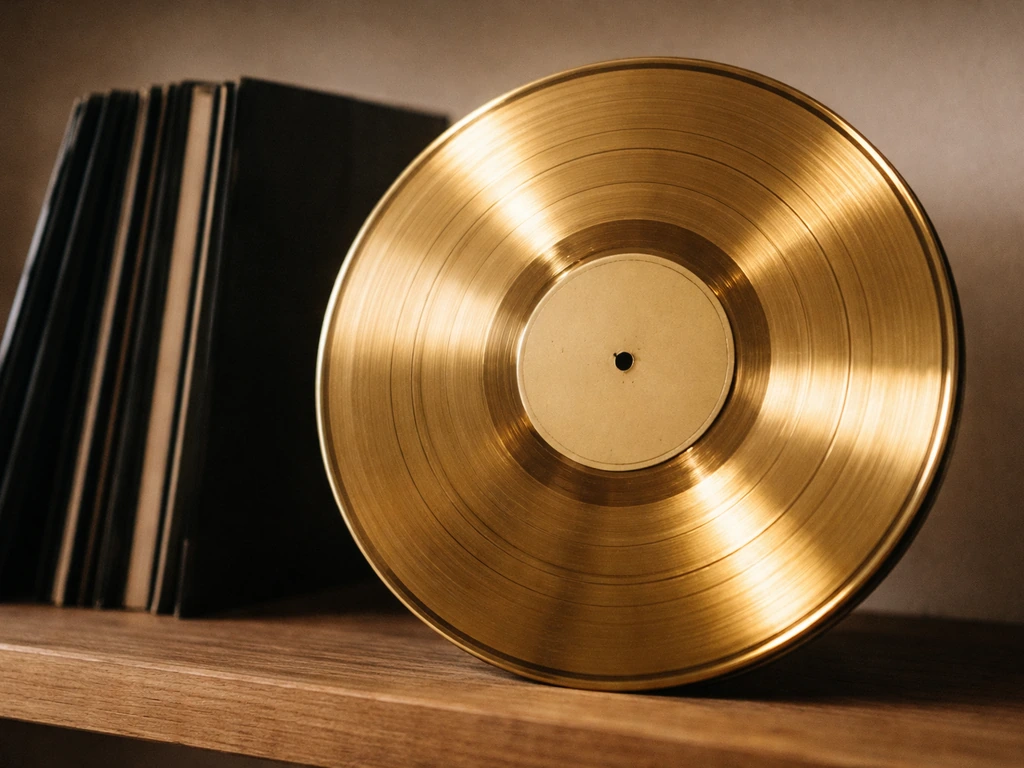
The 'Joromi' gold disc (100,000 copies by 1969) is the most documented commercial milestone of Uwaifo's career. At standard African label royalty rates of the era, artist royalties on a physical single typically ranged from 5% to 10% of the wholesale price. Even at conservative 1960s pricing, 100,000 units represented meaningful income for the time.
Beyond 'Joromi,' Uwaifo released multiple albums under his own brand, including titles listed on his official site such as 'Legend Reborn' and 'Sold a Million,' suggesting a catalog that generated ongoing, if modest, royalty income. The Victor Uwaifo creator site lists multiple album titles under his brand, such as “Legend Reborn” and “Sold a Million,” which supports the idea that his catalog continued to be produced and marketed Legend Reborn and Sold a Million.
The Musical Copyright Society Nigeria (MCSN) was formally registered in 1984 and gained statutory authority in 2019, meaning pre-1984 royalty collection was inconsistent. How much Uwaifo actually collected in royalties across his career is not publicly documented, but the catalog's longevity suggests cumulative earnings from performance rights and catalog licensing.
Live performances and touring
Uwaifo performed internationally throughout his peak years and continued appearing at events well into his later decades. His 2016 art exhibition at Bogobiri Art Gallery in Lagos, which also coincided with a CD album release, shows he was still monetizing his profile actively at age 75. Live performance fees for a Nigerian legend of his status at private events, state functions, and cultural festivals would have ranged from a few thousand to tens of thousands of dollars per engagement depending on the context. Over a career spanning roughly 50 active years, aggregate performance income is likely the largest single contributor to his accumulated wealth.
Visual art, sculpture, and the Victor Uwaifo Art Gallery
Uwaifo was a serious visual artist, not just a musician who painted on the side. He maintained the Victor Uwaifo Art Gallery in Benin City and exhibited nationally, including the 2016 Lagos show. African contemporary art markets have grown significantly since 2010, and an artist with Uwaifo's national recognition and UNESCO designation would command meaningful prices for original works. However, no auction records or gallery sales figures are publicly available for his pieces, making this the hardest income stream to quantify. It is reasonable to assume his art contributed six figures (in USD) to his wealth over several decades, but that is a directional estimate, not a documented one.
Business ventures and institutional roles
Uwaifo chaired entities including the Joromi Organisation, Joromi TV, and a recording studio. He also held a senior government role as Nigeria's first Commissioner for Arts, Culture and Tourism, which would have carried a government salary. His academic position as a university lecturer added further salary income. None of these roles would individually generate extreme wealth, but collectively they point to decades of consistent professional income alongside his creative earnings. Business equity in Joromi TV or the recording studio, if those entities held tangible assets, would also factor into a net worth calculation, but no valuations are publicly available.
Properties and investments

Uwaifo was based primarily in Benin City, Edo State, and Lagos. Property ownership in both cities, particularly for a figure of his stature over several decades, is plausible and consistent with Nigerian cultural norms around wealth preservation. Real estate in Benin City is substantially less valuable per square meter than Lagos, but longstanding ownership of multiple properties could represent several hundred thousand dollars in asset value at current market rates. No specific properties are documented in public sources.
Common data gaps and why they affect the final range
Here is the honest problem: almost everything above is estimated from category benchmarks rather than primary financial records. Uwaifo never made public financial disclosures, and Nigeria does not have a system of mandatory estate filings that would surface post-death wealth data for public figures. Several specific gaps make the estimate wider than it would be for, say, a U.S. or U.K. artist of equivalent stature.
- No documented royalty statements or MCSN distribution records are publicly available for Uwaifo's catalog.
- Art gallery sales figures and auction records for his visual work are not in any accessible public database.
- The business equity value of Joromi TV, the recording studio, and the Joromi Organisation is entirely undocumented.
- Historical naira-to-dollar conversion is volatile: the naira lost significant value multiple times between 1966 and 2021, making any lifetime-earnings figure in USD highly sensitive to which exchange rate you apply.
- Estate information following his August 2021 death has not been publicly disclosed, so there is no post-mortem confirmation of accumulated assets.
- Many net worth sites repeat the same unverified range without explaining methodology, which creates a false sense of consensus around numbers.
These gaps are why a range is more honest than a single number. The floor of $1 million reflects a conservative accounting of documented milestone income (the gold disc, a long performance career, academic salaries) while the ceiling of $5 million reflects reasonable but unverified assumptions about art sales, business equity, and property holdings. It is possible his estate was worth more, particularly if any of his business ventures held substantial equity, but there is no public evidence to justify a higher ceiling with confidence.
Best estimate range and what would change it
| Revenue/Asset Category | Estimated Contribution (USD) | Confidence Level |
|---|---|---|
| Music catalog and royalties (lifetime) | $100,000 – $500,000 | Low – no royalty statements available |
| Live performances and touring (50-year career) | $300,000 – $1,500,000 | Medium – benchmarked from peer artists |
| Visual art sales and gallery income | $100,000 – $1,000,000 | Low – no auction or sales records |
| Government/academic salary (career total) | $50,000 – $200,000 | Medium – consistent with Nigerian public-sector benchmarks |
| Business equity (Joromi TV, studio, organisation) | $0 – $500,000 | Very Low – no business valuations available |
| Real estate and property holdings | $200,000 – $500,000 | Low – no property records publicly available |
| TOTAL ESTIMATED RANGE | $750,000 – $4,200,000 | Low-to-Medium overall confidence |
Rounded to a practical range, $1 million to $5 million is defensible. A figure below $1 million would require assuming most of his career earnings were consumed by expenses or eroded by currency depreciation, which is possible but not supported by evidence of his sustained professional activity. A figure above $5 million would require documented business valuations or art sales that are not currently in any accessible public source.
What would change this estimate? Three things would push the number up: (1) estate records or probate filings becoming public in Nigeria, (2) auction records emerging for his sculpture or paintings at major African art auctions, or (3) any documented valuation of Joromi TV or associated business entities. What would push the number down: evidence that his business ventures were loss-making or that his estate was modest as disclosed to heirs.
How to verify sources and spot fake net worth claims
The single most important skill when researching any public figure's net worth is asking one question: where does this number come from? Most net worth sites, including those that quote Uwaifo in the $1 million to $10 million range, do not answer that question. They aggregate figures from other sites, often without checking whether the originating source had primary data either. The result is a chain of citations that eventually traces back to nothing verifiable.
Here is a practical checklist for evaluating any net worth claim you find today:
- Does the source cite specific income events (record sales figures, performance fees, property transactions) or just assert a total? Specific is better.
- Does the source explain its methodology or currency conversion assumptions? No methodology means no reliability.
- Is the source a reputable outlet covering the artist's career (like Afropop Worldwide, The Guardian, Vanguard News) or a generic celebrity net worth aggregator? Primary coverage beats aggregators.
- Does the figure align with documented career milestones? Uwaifo's gold disc in 1969, his UNESCO recognition in 2017, and his decades of exhibition activity are real data points. Any estimate wildly inconsistent with those milestones deserves skepticism.
- When was the figure last updated? Post-2021 figures need to account for his death and estate status. Pre-2021 figures are describing his wealth in life, not necessarily what was transferred.
- Does the site disclose limitations? A trustworthy net worth estimate acknowledges what it cannot know. One that presents a number with false precision is a red flag.
For primary research today, the most productive sources to consult are: Afropop Worldwide's documented interview archive on Uwaifo, Nigerian newspaper archives (Vanguard, ThisDay, The Punch) for career and business coverage, the Victor Uwaifo Art Gallery's own communications or any auction house records mentioning his works, and MCSN (Musical Copyright Society Nigeria) for any publicly shared data on royalty distribution to his estate. None of these will give you a balance sheet, but they will give you the documentary building blocks for a defensible estimate.
How Uwaifo compares to other notable Victors in the arts
To put the estimate in perspective: Uwaifo's career trajectory, combining pioneering record sales, a decades-long performance career, and visual arts income, is richer in documented milestones than many of his peers. Other Nigerian public figures named Victor, including those working in entertainment and public life, often have narrower documented income streams than Uwaifo's multi-disciplinary career would suggest. His UNESCO designation and first-gold-disc status gave him an international profile that few West African artists of his generation matched, which plausibly supported higher-end fees and greater catalog visibility than contemporaries without those credentials.
The bottom line: Sir Victor Uwaifo's estimated net worth of $1 million to $5 million reflects a genuinely distinguished career with multiple income streams, constrained by the absence of any public financial documentation. That range will remain uncertain unless estate records or primary business disclosures emerge. What is not uncertain is his legacy: Africa's first gold disc, a UNESCO Living Treasure designation, and a half-century of creative output that continues to generate royalties and cultural capital long after his passing.
FAQ
Does Victor Uwaifo net worth mean his wealth at the moment he died or his annual earnings?
Not directly. After death, “net worth” estimates usually refer to the wealth accumulated at the time of death or the value of interests held through the estate. If the estate transferred assets to heirs or held them inside continuing businesses, the public will not see a clean number like a company balance sheet, so ranges remain the most defensible approach.
Why do net worth websites disagree so much about Victor Uwaifo net worth?
Because many figures are built from different assumptions, the safest way to compare is to look at the site’s stated methodology, time frame, and what assets it counts (real estate, business equity, royalties, art sales). If a site does not explain assumptions or provide primary documents, treat it as an unsupported estimate rather than a lower or higher “true” net worth.
What should I verify to confirm or challenge the estimated Victor Uwaifo net worth range?
If you want to stress-test the $1M to $5M range, the biggest unknown is not music popularity, it is measurable cash flow. Specifically, check whether there is evidence of large royalty payouts to his rights holders, documented gallery or exhibition sales, and any publicly mentioned ownership or valuations for Joromi-affiliated entities.
How are royalties and artwork valued when calculating net worth for Victor Uwaifo?
For a deceased creator, “total assets” estimates often depend on what can be valued today. Royalties from catalog licensing and performance rights may still be relevant, but physical assets like sculptures and originals are harder to price without auction results or private sale data, which is why art-related portions usually swing the estimate more.
How much do currency conversion assumptions affect Victor Uwaifo net worth estimates?
Yes, but it is not just inflation. The article’s range accounts for the fact that his income likely accrued in Nigerian naira across decades, while many websites convert to USD at today’s rates. Large currency fluctuations can make older earnings look either too small or too large if the conversion method is not clearly defined.
Can I use Victor Uwaifo net worth to estimate what his family is worth now?
Be cautious about “family wealth” and “current household income” claims. Unless there are probate records or direct disclosures about what was inherited and how assets were managed, you usually cannot reliably convert “Victor Uwaifo net worth” into what his heirs are worth today.
What new evidence would most likely change the Victor Uwaifo net worth estimate?
If probate or estate records are later published, they can tighten the ceiling and floor, especially if they list assets (property, shares, business holdings) and liabilities. Similarly, credible valuations for Joromi TV or the studio, and consistent evidence of art sales at known prices, would shift the range in a more evidence-based direction.
What is the most common research mistake people make when estimating Victor Uwaifo net worth?
A common mistake is treating any single “net worth number” as documented fact. Another is adding up sources that themselves were copied from earlier posts. A quick decision aid: if you cannot trace the claim to primary or documentary building blocks (not just another net worth site), you are likely dealing with a citation chain.
Next Articles

Victor Alcantara Net Worth: How to Estimate It Accurately
Estimate Victor Alcantara net worth accurately by identifying the right person and using contracts, profiles, and assets

Victor Oliveira Net Worth: How It’s Estimated and Verified
Learn how victor oliveira net worth is estimated using verifiable earnings, contracts, prizes, endorsements, and how to

Victor Almeida Net Worth: How to Identify and Verify Estimates
Learn to verify Victor Almeida net worth by disambiguating identities and checking public earnings, assets, and liabilit