
As of April 2026, Viktor Axelsen's net worth is estimated at between $5 million and $10 million USD. The most defensible midpoint sits around $7 million to $8 million, built primarily on more than a decade of professional badminton prize money, a long-running Yonex equipment deal, and a growing portfolio of corporate sponsorships. That range is an informed estimate, not an audited figure, and this article walks through exactly where it comes from and how you can track it yourself. If you are specifically looking for Viktor Axelsen's net worth, this estimate is the basis for the range cited throughout the article.
Viktor Axelsen Net Worth in Dollars: Estimate Breakdown

Marcus Kellerman
25 Apr 2026
Who Viktor Axelsen actually is
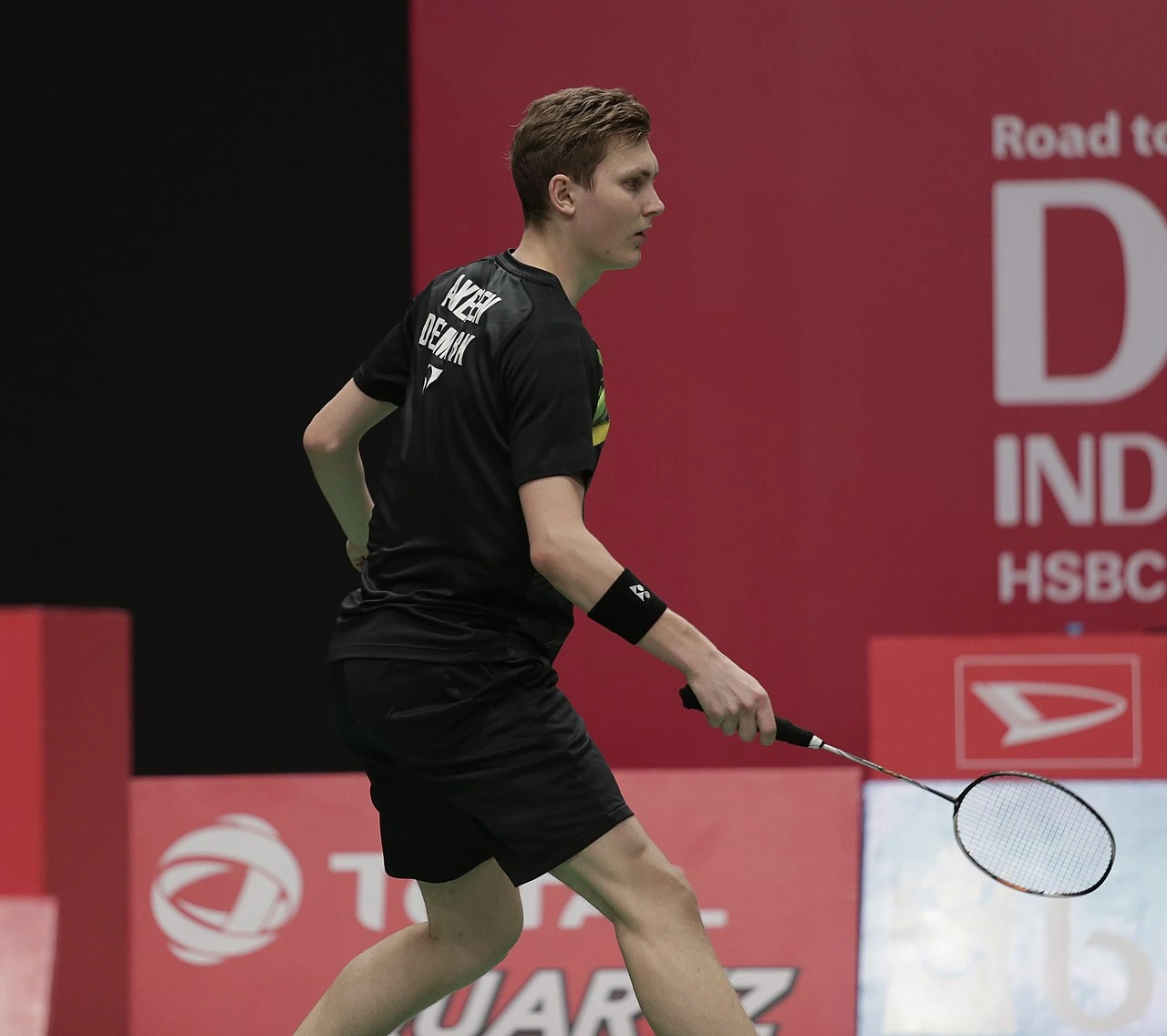
Viktor Axelsen is a Danish professional badminton player born in Odense, Denmark. He made his international debut at the 2009 Denmark Open (Super Series) and has since become the most dominant men's singles player of his generation. His Olympic record alone tells the story: a bronze medal at Rio 2016 and gold at Tokyo 2020, followed by gold at Paris 2024. He has held the BWF World No.
1 ranking for extended stretches and won the BWF Player of the Year award for the 2022 season. In 2023, BWF confirmed he was the highest prize-money earner on the entire circuit that year. He is the Viktor you are looking for, not a businessman, politician, or any other public figure sharing a similar name.
What net worth actually means (and why online figures are always estimates)
Net worth has a simple definition: assets minus liabilities. Everything you own (cash, property, investments, brand equity in a business) minus everything you owe (mortgages, loans, taxes due). The number gives a snapshot of economic position at a single point in time, which is why it shifts constantly.
The problem with applying that definition to a private individual like Axelsen is that almost none of the inputs are publicly disclosed. Prize money from official BWF tournaments is verifiable from public records. Everything else, including sponsorship contract values, personal investments, property holdings, and liabilities, is either inferred from press coverage or estimated using industry benchmarks. No celebrity net-worth figure from any aggregator site is an audited financial statement.
Forbes itself, in its methodology for the Forbes 400, notes that private wealth valuations rely on revenue and profit estimates, comparable multiples, and liquidity discounts. For an athlete like Axelsen, the uncertainty is even higher because badminton sponsorship contracts are almost never fully disclosed. Keep that in mind whenever you see a single precise number quoted anywhere online.
Career prize money: the verifiable foundation

Prize money is the most transparent part of any professional badminton player's income because BWF publishes results and associated payouts. Axelsen's BWF World Tour Finals tournament results page shows a career prize money figure of $475,000 from that single event series alone. Then in January 2024, BWF reported that Axelsen topped the entire circuit's prize-money leaderboard for 2023 with $645,095 in a single calendar year. Those two data points anchor the earnings picture.
Axelsen turned professional around 2012 and has been competing at the elite level since 2014. Assuming an average of roughly $300,000 to $500,000 per year across his peak earning years (conservative given his ranking dominance and the BWF's prize pool expansions), cumulative career prize money likely falls somewhere in the $4 million to $6 million range before taxes. The BWF World Tour Finals prize pool alone was set at $2.5 million for 2023 through 2026, reflecting a deliberate effort to raise player earnings across the tour. The HSBC BWF World Tour Finals 2025 overview page lists total prize money of USD 3,000,000. As one of the consistent qualifiers and frequent finalists in that event, Axelsen captures a disproportionate share.
One small but telling detail worth noting: in April 2022, Axelsen publicly called out BWF for delayed prize-money payments related to European tour events including the German Open, All England, and Swiss Open. That kind of public pressure from a top-ranked player over owed payments is a reminder that even verifiable prize income can be delayed, contested, or unpaid in part, which adds another layer of uncertainty to any cumulative estimate.
Sponsorships and endorsements: where the real money is
For elite athletes at Axelsen's level, endorsement income typically exceeds prize money over a career. His primary equipment partnership is with Yonex, a relationship that started in August 2014. In September 2025, Yonex launched a dedicated 'Viktor Axelsen Collection' global campaign titled 'We Strive Together,' with an official launch date of September 26, 2025, framing Axelsen specifically as their Olympic gold medalist partner.
That kind of brand-centered campaign, with a named product line, signals a top-tier partnership rather than a basic equipment deal. Exact contract values are not public, but for a player of his standing and global profile, annual Yonex earnings are plausibly in the range of $500,000 to $1. 5 million per year, based on comparable elite badminton and racket-sport benchmarks.
Beyond Yonex, chemical and logistics company HELM AG signed Axelsen as its main sponsor, with the HELM logo placed on his jersey at tournaments worldwide (excluding Olympic and advertising-restricted events). HELM is a large German trading company with global revenues in the billions, which indicates this is a serious commercial partnership, not a minor regional deal. Again, the specific financial terms are not disclosed, but main jersey sponsors for globally ranked athletes typically command fees in the six-figure annual range at minimum.
Together, these two anchor deals suggest annual endorsement income likely in the range of $1 million to $2.5 million at the peak of his earning power, though actual figures depend on performance bonuses, exclusivity clauses, and contract duration, none of which are public.
Other income streams

Beyond prize money and named sponsors, professional badminton players at Axelsen's level typically earn income from several additional categories. These are less documented for Axelsen specifically, but are standard across elite players at his ranking and profile level.
- Exhibition matches and invitational events: Top players receive appearance fees for non-tour exhibitions. Given Axelsen's status as a two-time Olympic medalist and the sport's growing commercial market in Asia, appearance fees for a player of his profile can range from tens of thousands to six figures per event.
- National federation and Olympic committee support: The Danish sports federation and Olympic program provide athlete funding, though these figures are modest compared to commercial income.
- Social media and content partnerships: Axelsen has an active social media presence and has featured in branded content campaigns. Sponsored social media posts and digital content deals add incremental income, though exact amounts are not public.
- Potential investments and business interests: There is no publicly documented evidence of major business investments or ventures as of April 2026. Unlike some athletes who diversify heavily into business, Axelsen's public profile remains centered on his playing career. Any investment income is speculative without disclosure.
- Badminton academies and coaching IP: Some elite players license their name or methods to training programs. No specific deal of this type has been publicly documented for Axelsen, but it represents a plausible future income stream.
Putting it all together: the net worth estimate
| Income Category | Estimated Range (USD) | Confidence Level |
|---|---|---|
| Career prize money (cumulative, net of taxes, approximate) | $2M – $4M | Moderate — BWF data verifiable, taxes and timing unclear |
| Yonex sponsorship (multi-year) | $2M – $5M | Low-moderate — no public contract terms |
| HELM AG jersey sponsorship | $500K – $1.5M | Low — inferred from deal type and company profile |
| Other endorsements and brand deals | $500K – $1M | Low — based on industry norms |
| Appearance fees and exhibitions | $250K – $750K | Low — no public documentation |
| Investments and assets (property, savings, other) | Unknown — not publicly disclosed | Very low — speculative |
Adding up the low ends of the documented or inferable categories gives a floor around $5 million. Adding the midpoints across all categories puts the estimate comfortably in the $7 million to $8 million range. The high end of $10 million is plausible if his Yonex deal is at the upper end of comparable contracts and if personal investment returns are meaningful, but there is no evidence to push confidently above that figure. A net worth in the $5 million to $10 million range with a midpoint around $7 million to $8 million is the most defensible estimate as of April 2026.
How to verify these numbers yourself

The most reliable public source for prize money is the BWF website directly. Player profiles on the BWF World Tour Finals site (BWF player ID 25831 for Axelsen) show cumulative tournament results and associated prize figures. BWF also publishes annual prize-money leader reports, so checking the January post at the start of each year gives you the most recent verified earnings figure. For endorsements, monitor official press releases from Yonex and any corporate partners, as those are the only authoritative disclosures. Company pages like HELM AG's news section occasionally confirm sponsorship arrangements. Major badminton news sites including BadmintonPlanet and Badminton World Federation's own news hub also cover new deals when they are announced.
What you should not treat as reliable: aggregator sites that publish a single round figure without explaining their methodology. Sites that list a number like '$5 million' or '$12 million' without breaking down the components are, at best, using similar benchmark assumptions to the ones in this article and, at worst, copying each other without verification. The Fidelity and Forbes definitions of net worth are useful anchors here: net worth requires knowing both assets and liabilities, and no public source currently has access to Axelsen's full balance sheet.
What could move the number up or down from here
Several concrete factors could shift the estimate materially over the next 12 to 24 months. On the upside: continued top-ranking performance means continued access to the highest prize pools, especially the expanded BWF World Tour Finals prize money running through 2026. A new or renewed major sponsorship deal, particularly anything that expands his profile into North American or broader Asian markets, would add significantly. On the downside: injury or a ranking drop reduces both prize money and the leverage that supports top-tier sponsorship fees. Sponsorship contracts that end without renewal, or a general commercial cooling as his career enters its later stages, would erode the estimate.
Tax and residency matters also play a real role. Axelsen is based in Dubai, a tax-advantaged jurisdiction for international athletes. That residency decision, which is common among European athletes with high global income, means he likely retains a higher proportion of gross earnings than he would under Danish tax rates, which can exceed 50% at the top bracket. That residency choice is publicly documented and is a legitimate wealth-building factor that probably pushes his retained net worth toward the higher end of the estimated range.
For readers tracking Viktor Axelsen's financial standing alongside other notable Viktors and Victors, the comparison is instructive. However, this article focuses on Viktor Dorobantu net worth by applying the same kind of category-by-category estimate to the available public information. If you are also interested in Viktor Voronov net worth, use the same approach the article outlines for private athletes: verify income streams and treat any totals from aggregators as estimates.
A professional racket-sport player like Viktor Troicki, who competed at the ATP level, provides one reference point for how prize money accumulates across a long career in a racket sport. Viktor Troicki net worth is often estimated using a similar approach, combining career prize money with income from endorsements. Viktor Troicki net worth estimates are typically built the same way, combining verifiable prize money with endorsement income.
Axelsen's badminton prize money totals are lower than top ATP earners but his market in Asia and his equipment deal structure are distinct advantages in the badminton commercial ecosystem.
The bottom line on sources and transparency
The prize-money components of this estimate are grounded in verifiable BWF data. The sponsorship estimates are inferred from publicly documented partnerships and industry norms, not from disclosed contract values. The investment and asset figures are unknown and treated as speculative. Anyone building a more precise estimate would need access to tax filings, contract disclosures, or personal financial statements, none of which are publicly available for Viktor Axelsen as of April 2026. That is the honest limitation of any net-worth estimate for a private professional athlete, and it applies here as clearly as it applies anywhere else.
FAQ
Why do some sites give a single “precise” Viktor Axelsen net worth number that doesn’t match a range?
Most aggregator figures are built from the same non-audited inputs as ranged estimates, but they compress assumptions into one number. If they do not break out prize money, endorsements, and the rationale for liabilities or taxes, the precision is cosmetic. A more trustworthy approach always shows which components are verified (prize payouts) versus inferred (endorsements, assets, liabilities).
Does net worth include his sponsorship and prize money from recent 2026 events, or is it only a past snapshot?
Net worth is always a snapshot at a date, but many “current” numbers lag behind because they are updated intermittently. If an estimate is labeled April 2026, it may still rely on older endorsement assumptions and only use the latest available prize-money totals. For the most accurate tracking, you should separate trailing verified prize income (from BWF) from the forward-looking endorsement assumptions (from announced deals).
How much do taxes usually change Viktor Axelsen’s retained wealth compared with gross earnings?
Taxes can significantly reduce retained income, but the article’s range already assumes a tax-impacted retention level by using Dubai residency as a key wealth-building factor. The practical takeaway is that two athletes with similar gross earnings can have materially different net worth outcomes depending on residency, contract structure (withholding), and country-by-country obligations tied to competition locations and image rights.
Can prize money be delayed or disputed, and would that affect net worth estimates?
Yes. Even when BWF payouts are officially published, real-world processing can be delayed for specific events or administrative reasons. That means cumulative “earned” figures may not equal “received” cash in the same period. For net worth tracking, it helps to treat prize-money totals as income potential and remember there can be timing gaps between tournament results and cash receipt.
Does “net worth” for an athlete like Axelsen mean he has that cash in the bank?
Not necessarily. Net worth includes assets that can be illiquid or already converted into other holdings, like investments, vehicles, or other property, minus liabilities. An estimate can be high even if cash on hand is lower in a given month. The article’s biggest uncertainty is precisely what portion is liquid versus invested, and what liabilities exist.
Should I trust a net worth estimate that doesn’t mention liabilities or debt at all?
You should be cautious. Net worth is assets minus liabilities, but many numbers on the internet omit debts because there is no public balance sheet. If an estimate does not discuss how loans, mortgages, taxes due, or business liabilities are handled, it is effectively an income-based fantasy approximation rather than a true net-worth model.
How can I build my own updated Viktor Axelsen net worth range each year?
Use a two-track method: (1) pull the latest verified annual prize-money totals from BWF’s yearly leaderboard and the event-series figures, and (2) update endorsement assumptions only when you see official deal announcements or campaign details. Then keep liabilities and investment returns as a stated uncertainty rather than pretending they are known. Finally, re-run the model as a range, not a single point estimate.
What’s the biggest “swing factor” that could move the estimate up or down within 12 to 24 months?
The estimate can swing most from (a) performance-driven access to higher prize pools, and (b) sponsorship renewal or re-pricing. Injuries that reduce ranking can lower both the odds of finals appearances and the bargaining leverage for fees. Contract end without renewal is often more impactful than small changes in prize money because endorsement income tends to scale with marketability and top-tier status.
Does his age or career stage change how sponsorships are valued?
Often, yes. As athletes enter later career stages, companies may adjust contract terms, tie fees more tightly to performance, or shift budgets toward younger properties. Even without a “new” deal, you could see lower annual endorsement estimates if renewal terms become less favorable. That is why year-to-year updates matter more than one-time headlines.
Why is his equipment deal with Yonex treated as so important for net worth?
Because named global campaigns and dedicated collection lines usually indicate a higher-profile commercial partnership than a minimal equipment arrangement. In practice, such deals often include not just product access, but brand usage rights, promotional appearances, and sometimes performance or royalty-like structures. Since contract values are not disclosed, the article uses benchmark ranges, but the decision point is whether the partnership looks “brand platform” level versus “gear-only” level.
What if he has other income streams like coaching, appearances, or business interests? How should those be handled?
If they are not publicly quantified, they should not be inserted as exact dollars. A better method is to include them as a bounded uncertainty category, such as “additional appearance and image-rights income,” and note that it could offset some downturns in prize money or sponsorship pricing. Without disclosures, you should treat these as potential contributors, not guaranteed numbers.
Next Articles

Victor Dorobantu Net Worth: How to Estimate and Verify It
Learn how to disambiguate Victor Dorobantu and build an evidence-based net worth range using verifiable sources.

Victor Voronov Net Worth: Best Estimate, Sources, and How to Verify
Estimate Victor Voronov net worth with disambiguation, source-based breakdown, and a step-by-step guide to verify update

Viktor Knavs Net Worth: Likely Range and How to Verify
Viktor Knavs net worth likely range, evidence-based method, and steps to verify using primary records.