
Victor Li Tzar-kuoi's net worth is estimated in the range of USD 5 billion to USD 11 billion as of mid-2026, depending on how you treat his indirect and trust-based interests in three Hong Kong-listed blue-chip conglomerates: CK Hutchison Holdings, CK Asset Holdings, and CK Infrastructure Holdings. No single public filing gives you a clean personal balance sheet, but between HKEX beneficial ownership disclosures, annual report trust structures, and share-transaction records, there is enough evidence to build a defensible range rather than guessing.
Victor Li Tzar Kuoi Net Worth: Evidence-Based Estimate Guide

Marcus Kellerman
16 May 2026

Who exactly is Victor Li Tzar-kuoi?

This is worth stating clearly because "Victor Li" is not a rare name, and confusion is easy. Victor Li Tzar-kuoi (Chinese: 李澤鉅, born 1 August 1964) is the elder son of Li Ka-shing, the Hong Kong billionaire widely described as Asia's richest man for much of the 2000s and 2010s. Victor is not to be confused with his younger brother Richard Li Tzar-kai, who runs PCCW and Pacific Century Group, nor with Victor Gao or Victor Chu, other prominent business figures of Chinese heritage who sometimes surface in adjacent searches.
In formal filings, his name appears as "LI Tzar Kuoi, Victor" (surname first, per Hong Kong convention). You will find this exact string in SEC EDGAR 13D filings, HKEX director-interest disclosures, and CK Asset and CK Infrastructure annual reports. If you are cross-referencing databases and see any variation of that string tied to CK Hutchison, CK Asset, or CK Infrastructure, you are looking at the right person.
Why pinning down his net worth is harder than it looks
Victor Li's wealth is almost entirely held through a layered trust-and-corporate structure, not through straightforward personal shareholdings. Li Ka-shing is the settlor of discretionary trusts that list Victor Li (and potentially other family members) as discretionary beneficiaries. The CK Hutchison and CK Asset annual reports explicitly disclose this framework. That means the shares are technically held by trust vehicles and controlled corporations, not in Victor's name directly. When HKEX disclosures show his "interest," they include beneficial owner interests, interests of controlled corporations, and beneficiary-of-trust interests, all aggregated under one line. Unpicking which portion is truly "his" personal wealth versus family-pool wealth is genuinely difficult.
Bloomberg's Billionaires Index addresses this by noting that if shares are pledged as collateral, the corresponding loan value is subtracted, and that valuations through opaque structures require assumptions. Forbes takes a similar approach, recalculating based on publicly traded holdings and market moves rather than static book values. Forbes explains this real-time billionaire methodology as tracking changes using publicly traded holdings and market updates, which drives frequent recalculation instead of relying on static book values recalculating based on publicly traded holdings and market moves rather than static book values. Both methodologies will produce different numbers for the same person depending on their assumptions about trust attribution and any debt offsets. This article will tell you the range those approaches land in and show you how to get there yourself.
The business background that actually drives his wealth

Victor Li has been embedded in the CK empire since the 1990s. He was named Chairman of CK Asset Holdings (then Cheung Kong) at its incorporation in May 1996. When Li Ka-shing formally handed the reins of the broader empire to Victor in 2018, Victor took on the roles of Chairman and Group Co-Managing Director of CK Hutchison Holdings and Chairman and Managing Director of CK Asset Holdings, while also serving as Chairman of CK Infrastructure Holdings. These are not ceremonial titles: CK Hutchison is a multinational conglomerate with ports, telecoms, retail, and energy assets across 50-plus markets; CK Asset is one of Hong Kong's largest property developers; CK Infrastructure is a global infrastructure investor with assets in utilities, transport, and energy. Together the three listed entities had a combined market capitalization in the hundreds of billions of Hong Kong dollars through 2025 and into 2026.
The 2018 succession is a plausible anchor for why estimates of Victor's personal financial control increased around that period. Before that, most wealth attributed to the family was tracked under Li Ka-shing's name. Post-2018, Victor's executive authority and disclosed ownership interests became the primary data points for any separate personal estimate.
The public financial evidence you can actually verify
Here are the concrete signals that feed any credible net worth estimate for Victor Li:
- HKEX director-interest disclosures: The CK Asset Holdings and CK Infrastructure Holdings annual reports (including the 2025/2026 editions) contain tables listing "Li Tzar Kuoi, Victor" with share counts, percentage stakes, and the category of interest (beneficial owner, controlled corporation, trust beneficiary). These are audited and filed with the exchange.
- HKEX Form 3A filings: Beneficial ownership notices are filed when stakes change. A Form 3A dated 23 May 2025 shows a relevant ownership update for CK Asset. These are date-stamped and publicly searchable on the HKEXnews portal.
- Share purchase transactions: News reporting based on HKEX data confirmed that Li Ka-shing and Victor Li raised their CK Asset (stock code 1113) holdings twice in a short window, with a combined transaction value of approximately HK$74.41 million. These purchases were made through a wholly-owned subsidiary of Li Ka-shing's foundation, which is a trust-structure signal, not a direct personal purchase, but it still counts toward disclosed beneficial interests.
- 50% beneficial interest disclosure: A China Daily report noted that Li Ka-shing and Victor Li each held a 50% beneficial interest in a vehicle that acquired additional CK Hutchison shares. This kind of split is useful for attributing a portion of joint holdings.
- SEC EDGAR 13D/13DA filings: Victor Li appears in US regulatory filings in his capacity as Chairman and Group Co-Managing Director of CK Hutchison, confirming identity and role in a US-accessible document trail.
- Third-party aggregators: GuruFocus maintains a "net worth, insider trading, and ownership" page for "Li Tzar Kuoi, Victor" and Investing.com shows CK Infrastructure ownership as of 31 December 2025, listing Li Ka-Shing Unity Holdings Limited with a percentage stake. These are useful cross-checks but are not authoritative sources.
How to turn that evidence into a net worth estimate

The core method is straightforward in concept even if messy in practice: identify Victor Li's attributable stake in each listed entity, multiply by current share price, sum the results, apply adjustments for debt and unlisted assets, and arrive at a range.
- Identify attributable stakes: Pull the most recent annual report director-interest table for CK Hutchison (stock 0001.HK), CK Asset (1113.HK), and CK Infrastructure (1038.HK). Note the percentage listed under his name across all interest categories. For the trust-beneficiary portion, analysts typically apply a discount or treat it as partial attribution, since he is a discretionary (not fixed) beneficiary. A common conservative assumption is to attribute 50% of trust-held interests to him personally.
- Multiply by market cap: Take the current share price multiplied by total shares outstanding for each company to get market cap, then apply his attributable percentage. As a rough benchmark, CK Hutchison had a market cap in the range of HK$170-250 billion in 2025-2026; CK Asset around HK$80-120 billion; CK Infrastructure around HK$50-80 billion. Exact figures shift daily.
- Convert to USD: Apply the prevailing HKD/USD exchange rate (roughly 7.78-7.80 as a fixed-band reference for most HK-listed scenarios).
- Adjust for debt and pledges: If any disclosed shares are pledged as collateral against personal borrowings, the notional loan value should be subtracted. This data is often not publicly available, which is why Bloomberg's methodology notes this as an explicit uncertainty.
- Add unlisted assets and subtract liabilities: Victor Li almost certainly holds interests in private vehicles, real estate, and cash, but no public disclosure gives a clean figure. Analysts typically add a modest premium (10-20% of the equity estimate) for unlisted assets, while acknowledging this is speculative.
- Cross-check against reported estimates: Compare your derived range to Forbes, Bloomberg Billionaires, and Wealth-X figures. If yours is significantly outside their range, revisit your stake attribution assumptions.
Net worth ranges and what different sources say
Based on the methodology above applied to publicly available 2025-2026 filings and market data, here is where the evidence lands:
| Source / Method | Estimated Range (USD) | Key Assumptions / Notes |
|---|---|---|
| Conservative (50% trust attribution, no unlisted premium) | USD 4-6 billion | Attributes half of trust-held interests; no credit for private assets; no debt offset assumed |
| Mid-range (full disclosed interest attribution, modest unlisted premium) | USD 7-9 billion | Takes all disclosed beneficial interests at face value; adds 15% for private assets; subtracts estimated modest leverage |
| Aggressive (full attribution + full unlisted premium) | USD 10-12 billion | Treats all trust interests as personal; adds 25% for private holdings; no debt reduction |
| Forbes/Bloomberg (as of recent reported figures) | Approximately USD 7-10 billion | Real-time recalculation based on traded holdings; exact figures require direct profile access and shift daily |
| GuruFocus third-party estimate | Varies (check live page) | Aggregated from insider trading and ownership filings; methodology is less transparent than Bloomberg/Forbes |
The honest answer is that USD 7-9 billion is the most defensible midpoint as of mid-2026, with meaningful uncertainty on both sides driven by trust attribution ambiguity and unlisted-asset unknowns. If you see estimates above USD 12 billion or below USD 4 billion for Victor Li specifically (not his father Li Ka-shing), treat them with skepticism and check whether the source has confused father and son or blended family wealth into a single figure.
What would materially change this estimate
- A significant sustained move in CK Hutchison, CK Asset, or CK Infrastructure share prices: a 20% drop in all three would cut the equity component by roughly USD 1.5-2 billion at mid-range attribution.
- Any formal trust restructuring or change in beneficiary status disclosed via HKEX annual report.
- A major acquisition or divestiture at the company level that changes market capitalization or introduces new debt.
- A disclosed personal pledge of shares as collateral (which would reduce the net figure under Bloomberg-style methodology).
- Any inheritance or estate-transfer event tied to Li Ka-shing's holdings, which could materially shift what flows to Victor versus Richard Li or other family vehicles.
How to verify and update this number yourself today
This is a live figure, not a static one. Here is a practical checklist for anyone who wants to run their own current estimate:
- Go to HKEXnews.hk and search for "Li Tzar Kuoi Victor" under the Disclosure of Interests system. Filter for the most recent Form 3A filings for CK Asset (1113), CK Hutchison (0001), and CK Infrastructure (1038). Note the share counts and dates.
- Download the latest annual reports for all three companies from their investor relations pages or the HKEX e-disclosure portal. Look for the directors' interests table and the trust/beneficial ownership footnotes.
- Pull current share prices from the HKEX website or any major financial data provider. Multiply by his attributable percentage to get a fresh equity value in HKD, then convert to USD.
- Check the Forbes Real-Time Billionaires list and Bloomberg Billionaires Index directly and search for Victor Li. Note the "as of" timestamp on whatever figure appears, since both platforms update daily based on market moves.
- Cross-reference GuruFocus's "Li Tzar Kuoi, Victor" insider trading and ownership page for any recent open-market transactions not yet reflected in other sources.
- Search Google News for "Victor Li Tzar-kuoi" filtered to the past 30 days. Look for any share acquisition announcements, company restructuring news, or analyst coverage that mentions stake changes.
- Check SEC EDGAR for any updated 13D or 13G filings linked to CK Hutchison's US-registered activities, which occasionally capture cross-border beneficial ownership updates.
If you are researching other prominent business figures of Chinese heritage for comparison context, note that this site also covers figures like Victor Chu and Victor Gao, whose wealth profiles are structured quite differently from Victor Li's listed-company-anchor model. If you are comparing other figures of Chinese business prominence, you may also want to look up victor chu net worth as a related contrast to how wealth is attributed. If you are looking at other names that sometimes show up in similar searches, such as Victor Gao, compare their net worth approach and assumptions, including what is publicly traceable versus what is not victor gao net worth. If you meant Victor Gao instead, you can use the same framework to track his holdings and estimate a separate net worth figure Victor Gao net worth. Victor Li's situation is unusual in that the bulk of his attributable wealth is tied to publicly traded Hong Kong blue chips, which actually makes the core equity calculation more transparent than many private-company-driven billionaire profiles, even if the trust layer adds genuine complexity.
Bottom line: the publicly available evidence supports a net worth range of roughly USD 5-11 billion for Victor Li Tzar-kuoi, with USD 7-9 billion as the most credible central estimate given reasonable trust-attribution assumptions and mid-2026 market conditions. That range reflects real uncertainty, not data quality failure. The trust structure is the main source of ambiguity, and any new HKEX beneficial ownership filing or major market move in the three listed companies is the fastest way to update it. blank" rel="noopener noreferrer">Investing.com’s CK Infrastructure ownership page is a third-party aggregation that includes an “as of Dec 31, 2025” timestamp and lists Li Ka-Shing Unity Holdings Limited with a percentage, which can be used as a cross-check but is not as authoritative as HKEX filings or the annual reports. For related context on reported figures for Victor Xiao, see our guide to the victor xiao net worth. If you are trying to pin down Victor Kislyi net worth, the key is separating Victor Li Tzar-kuoi's trust-attributed interests from broader family wealth and any debt offsets.
FAQ
How can I avoid confusing Victor Li Tzar-kuoi with Li Ka-shing or Richard Li?
Use a strict name filter. In Hong Kong and EDGAR filings, Victor Li Tzar-kuoi is typically listed with the surname first as “LI Tzar Kuoi, Victor” (not “Li Ka-shing” or “Richard Li”). If a result also names CK Hutchison or CK Asset as the related entity but the filing name is “Li Ka-shing,” the estimate is likely mixing father and son.
What’s the biggest source of error when estimating victor li tzar-kuoi net worth, and how do I test it quickly?
Rerun the range with two attribution scenarios: (1) treat trust beneficiaries as pooled family wealth with partial attribution to Victor, and (2) treat disclosed “interest” lines as fully attributable where the filing suggests beneficiary-of-trust linkage. If your midpoint shifts materially between scenarios, your range width is being driven by attribution assumptions, not share price.
Do debt and pledged-share collateral materially change victor li tzar-kuoi net worth estimates?
Yes, but with a caveat. The trust and controlled-corporation layer means you usually cannot confirm the exact personal debt tied to Victor specifically. If you see net worth figures that deduct loan balances, verify whether the deduction is based on pledged shares at the entity level or assumes personal borrowing. Share-pledge-based offsets can be reasonable, but they are often incomplete.
How should I handle unlisted assets and other private holdings when estimating his net worth?
Focus on the three named HK-listed anchors (CK Hutchison, CK Asset, CK Infrastructure), then separately sanity-check for other value like private holdings. The article’s range is mainly equity-market-driven; if a source claims huge additional wealth, look for a clear, explainable basis (audited disclosure or clearly identified controlled interests) rather than generic “private assets” language.
How often should I update a current-range estimate, and what events should trigger a refresh?
Update the estimate whenever any of these move: major HKEX beneficial-ownership disclosures for CK Hutchison, CK Asset, or CK Infrastructure, significant capital-market actions (large share sales or buybacks), and notable share price swings. Practically, quarterly filing cycles can lag reality, so treat your estimate as current only up to the last major disclosure you incorporated.
When filings aggregate interests across trust and controlled entities, how do I interpret what portion is actually his?
Try not to treat trust-based holdings as directly equivalent to “shares in his name.” Instead, use the filing’s structure: beneficial owner interest, controlled corporation interest, and beneficiary-of-trust interest can all be aggregated under one line. If a source does not describe which of these components it used, you should discount its precision.
What cross-checks can I use across CK Hutchison, CK Asset, and CK Infrastructure to validate an estimate?
Use a consistency check across the three CK entities. If one estimate implies a very large attributable stake in CK Asset but small attributable stakes in CK Hutchison and CK Infrastructure without any disclosure reason, it may be the result of inconsistent attribution methodology or mistaken identity.
Why do estimates sometimes differ even when they use the same publicly traded holdings?
Be careful with time-of-day and currency framing. If the estimate converts HKD to USD, different FX rates on the valuation date can shift the final number. Also, avoid mixing “market cap” style snapshots with “net worth after debt” style assumptions without reconciling the debt treatment.
If I use billionaire index style estimates, how should I interpret them for victor li tzar-kuoi specifically?
If you must rely on third-party billionaire trackers, use them as directional, not definitive. Prefer those that explicitly describe attribution (trust vs personal) and debt/pledge handling. For anything that reports a single tight number with no method notes, treat it as less reliable given the trust attribution ambiguity described in this guide.
What’s the most practical next step if I want to produce my own updated victor li tzar-kuoi net worth range right now?
The fastest improvement is to pull the latest HKEX beneficial ownership updates tied to “LI Tzar Kuoi, Victor” and then map those disclosures to the specific listed entities’ share counts you use in your calculation. Even one updated beneficial-ownership filing can shift your attributed equity estimate enough to widen or narrow the range.
Next Articles
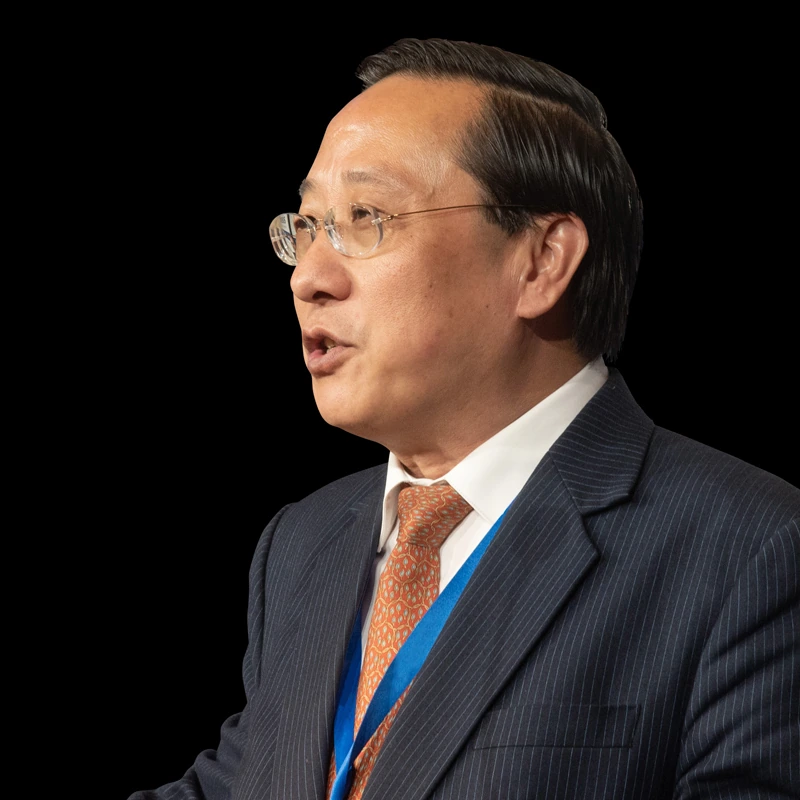
Victor Zhikai Gao Net Worth: How to Estimate Accurately
Learn how to estimate Victor Zhikai Gao net worth using public career, roles, deals, and reconcile conflicting claims.
Victor Kislyi Net Worth: Who He Is and How to Estimate
Learn which Victor Kislyi you mean and estimate net worth using public evidence, ranges, and validation steps.

Victor Ganzi Net Worth: How It’s Estimated and Verified
Evidence-based estimate of Victor Ganzi net worth, how it’s calculated, verified, and why estimates differ