
Victor B. Consunji is the founder and chief executive of Victor Consunji Development Corp. (VCDC), a real estate development company, and is a member of the prominent Consunji business family in the Philippines.
Victor Consunji Net Worth: Estimate and How to Verify It

Marcus Kellerman
2 May 2026
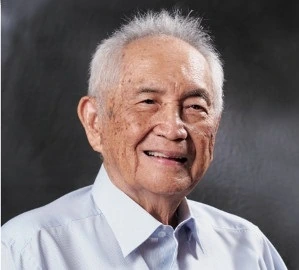
Based on publicly available shareholding disclosures, his role in the DMCI and Semirara Mining (SMPC) ecosystem, and the estimated value of his equity positions, a reasonable evidence-based net worth range as of May 2026 sits somewhere between PHP 1 billion and PHP 5 billion (roughly USD 17 million to USD 87 million at current exchange rates), though the exact figure depends heavily on how you count indirect holdings, the current SMPC share price, and whether private real estate assets are included.
That range is an estimate, not a confirmed figure, and I'll walk you through exactly how to interpret and update it.
First, let's make sure we're talking about the right person

The Consunji family is large, and the name 'Victor Consunji' appears in multiple contexts online. Here's the specific individual this article covers: Victor 'Sid' B. Consunji, the founder and CEO of Victor Consunji Development Corp. (VCDC), a Philippine real estate firm. He is part of the broader Consunji clan tied to DMCI Holdings and Semirara Mining and Power Corp. (SMPC). The Philstar profile headlined 'Victor Consunji tweaks a legacy' is one of the clearest published identifiers connecting the VCDC leadership role to his name.
There is a real and practical pitfall here: Philippine SEC and PSE filings consistently use 'Victor A. Consunji' rather than 'Victor B. Consunji' in shareholding disclosures for Semirara. Those disclosures document a Director, President and Chief Operating Officer of Semirara.
So when you're pulling ownership data from PSE Edge or SEC documents, you may encounter 'Victor A. Consunji' in insider transaction records, which refers to a different individual within the same family. The 'B. ' vs.
'A. ' distinction matters if you want to attribute the right equity stakes to the right person. For VCDC's founder, the correct identifier is Victor B. Consunji, whose wealth is primarily tied to the private real estate company rather than direct disclosed public shareholdings in SMPC or DMCI.
Other Consunji net worth profiles, including those covering similarly named Filipino businesspeople, face the same disambiguation challenge.
What 'net worth' actually means for a businessperson like this
Net worth in this context is not a number anyone has officially reported. It is an estimate calculated by adding up known or inferable assets and subtracting known or estimated liabilities. For a Philippine conglomerate-affiliated businessman, the inputs typically look like this: the market value of any publicly traded shares held directly or beneficially, estimated value of private company stakes (like VCDC), real property holdings, and other financial assets, minus any known debt obligations. The problem is that most of these inputs, especially private company valuations, are not publicly reported. What you can access are PSE and SEC ownership disclosures, which show shares held in listed companies, and those are the most reliable quantitative anchor points.
Philippine SEC and PSE beneficial ownership rules require disclosure of both direct and indirect beneficial ownership, so a listed company's annual report or governance document may show a Consunji family member's economic interest even when shares are held through a corporation or trust. However, some net worth models treat the full beneficial ownership figure as economically equivalent to personal wealth, while others apply discounts for shared family structures or holding companies. This methodological choice alone can produce dramatically different estimates for the same individual.
The best available estimate and how it's built

Victor B. Consunji's primary identified wealth driver is VCDC, a private real estate developer. Because VCDC is not publicly listed, there is no market-price-based valuation available. Estimating its value requires either revenue or asset multiples applied to whatever partial financial data is publicly available, which introduces significant uncertainty. His family connection to DMCI Holdings and Semirara adds potential indirect exposure to those companies' valuations, but that exposure depends on whether he holds shares directly, through a family holding structure, or not at all in his own name as a beneficial owner.
Given the available data, the most defensible approach is a floor-and-ceiling range rather than a single number. The floor is anchored by what can be verified: his role as founder/CEO of a privately held real estate firm operating in the Philippines, which for a company of VCDC's profile would conservatively suggest assets in the hundreds of millions of pesos. The ceiling is informed by the broader Consunji family wealth context, where DMCI and Semirara combined market capitalization runs into the hundreds of billions of pesos, though Victor B.'s personal share of that is unconfirmed and likely modest relative to the primary DMCI directors.
| Wealth Component | Source Basis | Estimate / Note |
|---|---|---|
| VCDC equity stake | Private company, no public filing | Not directly quantifiable; estimated mid-to-high hundreds of millions PHP based on company profile |
| Public company shareholdings (DMCI/SMPC) | PSE/SEC beneficial ownership disclosures | Not confirmed under 'Victor B. Consunji' in publicly reviewed filings; distinguish from 'Victor A. Consunji' |
| Real property holdings | No public registry data available | Likely significant given real estate sector, but unverified |
| Liabilities | Not disclosed | Unknown; assumed typical for private business ownership |
| Overall estimated range | Model-based | PHP 1B to PHP 5B (approx. USD 17M to USD 87M) as of May 2026 |
This range should be treated as a working estimate with wide uncertainty bands. It is not sourced from a confirmed wealth ranking or audited statement. It reflects what a reasonably constructed model produces when you combine private company context, family business affiliation, and the absence of direct public shareholding disclosures under his specific identifier.
Where to verify: the actual documents and sources to check
For anyone wanting to do their own verification rather than just accept an online estimate, here are the specific sources and what each one can tell you. On PSE Edge, you can review the posted disclosure documents to verify beneficial-ownership changes attributed to the correct “Victor Consunji” identifier.
- PSE Edge (edge.pse.com.ph): Search for Semirara Mining and Power (ticker: SCC) under company disclosures, then filter for 'Change in Shareholdings of Director.' This is where insider transactions for Consunji family members are documented. Remember to check whether the filer is 'Victor A. Consunji' or 'Victor B. Consunji,' as they are different people.
- Philippine SEC Online: Search for VCDC (Victor Consunji Development Corp.) to pull audited financial statements, general information sheets, or any filings that might disclose the company's asset base or equity structure.
- DMCI Holdings governance documents: DMCI publishes annual corporate governance reports and shareholding tables for board members. The 2022 governance PDF, for example, includes beneficial ownership tables for Consunji family members. These are available on the DMCI investor relations page.
- Semirara Mining annual reports: The SEC Form 17-A annual report includes a 'Security Ownership of Certain Beneficial Owners and Management' table. The 2006 version anchors the historical record; later annual reports update the figures. Look for the relevant Consunji name entry and share count.
- Philstar and other Philippine business press: Profile pieces like the 'Victor Consunji tweaks a legacy' article provide biographical context and business role confirmation that help validate identity before attributing financial data.
A note on U.S. sources: SEC EDGAR is the correct tool for U.S.-listed companies, where Forms 3, 4, and 5 document insider ownership. Victor B. Consunji and VCDC are Philippine entities, so EDGAR is not the right search destination here. Stick to PSE Edge and the Philippine SEC's online portal.
Why different websites give you different numbers

If you've already searched and found conflicting figures, the discrepancies almost always come down to a handful of methodological choices that different sites make without disclosing them. Full custom garage Victor Cacho net worth is typically discussed in similar personal-wealth articles, where claims depend on whether the figures are sourced or just modeled.
- Beneficial vs. record ownership: Some models use only directly registered shares; others include indirect beneficial ownership (shares held through corporations where the subject is a controlling stockholder). Semirara disclosures explicitly distinguish 'D' (direct) and 'I' (indirect) forms of ownership, and treating the two identically can double-count or under-count economic exposure.
- Share price timing: A net worth model built on SMPC or DMCI shares at a 52-week high looks very different from one built on current prices. Sites that haven't updated since, say, 2023 may be using price inputs that are significantly off from today's market.
- Identity attribution errors: Any site that uses PSE filings for 'Victor A. Consunji' and publishes the result under 'Victor B. Consunji' has made an attribution error. Given how similar the names are, this is a common mistake worth checking for.
- Private asset assumptions: Some estimators include a real estate company's estimated asset value; others ignore private holdings entirely. For Victor B. Consunji, whose primary wealth driver is VCDC (a private firm), ignoring private assets produces a severe underestimate.
- Currency conversion timing: PHP/USD exchange rates fluctuate. A figure reported in USD without a stated conversion date can drift significantly from its PHP-based source.
What could move this number significantly
The single biggest market-linked risk factor for the Consunji family wealth ecosystem right now is Semirara's coal mining contract status. In February 2026, Forbes reported that SMPC and DMCI shares dropped sharply after reports emerged that the Philippine government would not extend Semirara's coal mining contract beyond 2027. If that decision is finalized, it would materially reduce the market value of Semirara equity and, by extension, the equity-stake components of any Consunji family member's net worth that includes SMPC holdings. If you are also comparing other reported claims, see how the victor cuevas net worth estimates are derived and what sources they rely on. This is a concrete, near-term catalyst to monitor.
On the positive side, dividend distributions can significantly add to realized wealth even when market cap-based estimates decline. Semirara has historically made large special dividend payments tied to coal earnings, and those cash distributions represent wealth flowing out of the company to shareholders and into personal balance sheets. Semirara-hosted dividend announcements in the company press release document that Semirara declared both regular and special cash dividends. A net worth model that only tracks share price can miss this channel entirely.
For VCDC specifically, the Philippine real estate market's trajectory matters. Rising property values in Metro Manila and key provincial markets would lift the private company's asset base, while a slowdown in condominium demand or construction cost inflation could compress margins and reduce estimated equity value.
- Semirara coal contract extension decision (2026-2027 timeline): Direct impact on SMPC share price and equity value
- DMCI Holdings share price movement: Relevant if Victor B. holds any indirect exposure through family structures
- VCDC project pipeline and real estate market conditions: Primary driver of private wealth component
- Philippine peso exchange rate: Affects USD-denominated estimates without changing the underlying PHP figures
- Special dividend distributions from SMPC or DMCI: Realized cash wealth that market-cap models may not capture
- Regulatory changes affecting Philippine mining or property development sectors
How to keep your estimate current and check its accuracy
The most practical workflow for staying on top of this is to set up a small set of bookmarks and check them on a quarterly basis or whenever a major business news event affects Semirara or DMCI. Here is a concrete process that works for Philippine conglomerate-linked businesspeople like Victor B. Consunji.
- Bookmark the PSE Edge company page for Semirara Mining (CMPY_ID=188) and check the disclosure section for any new 'Change in Shareholdings of Director' filings. If a new one appears under a Consunji name, note the share count, transaction price, and whether the ownership is direct or indirect.
- Check the DMCI Holdings investor relations page annually when the Corporate Governance report is published. Look for the beneficial ownership table and the 'Shareholdings of the Board of Directors' section for any updated Consunji family entries.
- Search the Philippine SEC's online portal for VCDC's most recent audited financial statements. Any disclosed total assets or equity figure is a direct input for private company valuation.
- When you find a net worth figure on any website, ask three questions: What share price was used? Was beneficial or record ownership counted? Is 'Victor B.' or 'Victor A.' the source of the filing? If the site can't answer those, treat the number with appropriate skepticism.
- For major news triggers (like the February 2026 SMPC contract reports), check current SMPC and DMCI share prices on PSE Edge and note the percentage change from when your estimate was last calculated. Adjust the equity-stake component proportionally.
- Use search terms like 'Victor Consunji VCDC SEC filing,' 'SMPC Victor Consunji shareholdings,' and 'DMCI Consunji governance 2025' (or the current year) to surface fresh reporting and disclosures.
One final note on accuracy expectations: for a businessperson whose primary wealth is in a private company, no publicly sourced estimate will be precise. The PSE and SEC disclosures give you the public equity anchor points, but VCDC's value is a model output, not a quoted price.
Any estimate, including the PHP 1B to PHP 5B range offered here, should be read as an informed approximation that could shift materially if new private financial data becomes available or if market conditions change significantly. That transparency is the honest starting point for any net worth research on a figure like Victor B. Consunji. For more context on his personal finances, you can cross-check how websites compute Vicente Quimbo net worth and why they may diverge.
FAQ
How can I be sure I am using the correct Victor Consunji when I pull ownership data from PSE or SEC filings?
Yes, but you should treat it as a two-step check: first confirm which identifier you are actually mapping (Victor B. Consunji vs Victor A. Consunji), then verify whether any PSE/SEC entry claims beneficial ownership in his name or only links him via a family-controlled holding entity. If the document does not explicitly state beneficial ownership tied to Victor B., you should not automatically add those public-market shares into his personal net worth model.
Why do net worth estimates for Victor Consunji vary so much even when they cite the same disclosures?
Separate “economic interest” from “personal control.” Some net worth sites count beneficial ownership through corporations, trusts, or family holding companies at face value, while others discount for indirect holdings or shared control. A practical way to reconcile is to compute two scenarios, one using full beneficial ownership and another applying a conservative ownership weight based on the holding entity’s chain of ownership you can document in filings.
What’s the best way to estimate the value of VCDC without a public stock price?
For a private company like VCDC, you cannot rely on a market price, so you need a valuation proxy. If you only have partial public financials, use a range-based method (for example, applying an earnings multiple to whatever profit proxy is available, and cross-checking against asset-based signals like land or project inventory scale if any is disclosed). The key is to keep the valuation as a band, not a point estimate, because VCDC’s value can swing with project stage and liquidity timing.
When subtracting debt, how do I avoid mistakenly treating company liabilities as Victor Consunji’s personal obligations?
Start by checking which liabilities are truly attributable to the person. Even if a private company has debt, that does not always translate 1:1 to personal liabilities depending on corporate structure, guarantees, and whether the debt is non-recourse. For net worth verification, look for any disclosed guarantees or personal/related-party obligations. If none are disclosed, model company debt as a company-level factor, not automatically as personal debt.
How should I incorporate dividends into a net worth model if share prices fall?
Dividend cash should be treated as an additional asset inflow, not a justification for a higher net worth “snapshot” without adjusting other inputs. If your method only multiplies shares by current price, you can understate realized wealth during high-dividend periods. A practical correction is to add an estimated cumulative dividend contribution since the last model refresh, then subtract any reinvestment assumptions if you can support them.
Besides Semirara’s coal contract status, what near-term signals should I monitor that could quickly change the net worth estimate?
Watch Semirara contract and renewals, but also track second-order effects like guidance changes, impairment risk, and any special distributions that might shift with earnings. Even if the contract extension outcome is uncertain, market expectations can move equity value before any formal decision, so your model inputs should be updated on major announcements rather than only on filing dates.
What timeline should I use when verifying the estimate, given that PSE/SEC filings and annual reports cover different periods?
Use filing dates and fiscal year coverage. An estimate you make in May 2026 may need to reference ownership disclosures that were filed earlier or later, and beneficial ownership can change around corporate actions. A good workflow is to record the “as-of” date for each disclosure and recalculate your model when a new annual report or governance document updates holdings.
How can I sanity-check a third-party Victor Consunji net worth page to see if it is actually verifiable?
Don’t rely solely on automated net worth websites’ “source” statements. A fast validation step is to reproduce their math with your own inputs: (1) identify the share count and price used for listed holdings, (2) confirm whether the person’s identifier matches the beneficial ownership entry, and (3) isolate whether private-company value is assumed from a multiple or an asset estimate. If any of those three are missing, treat the claim as a modeled guess rather than verified data.
If Victor B. Consunji holds stakes through holding companies, how do I convert that into a personal VCDC ownership percentage?
Yes, but only where it is clearly documented. If VCDC is owned through an entity chain, you may need the ownership percentages at each layer to convert “shares held in a holding company” into an economic interest in VCDC. If the chain is not fully disclosed publicly, you can still bracket the value using conservative ownership assumptions, but you should label it as an inference, not an observed fact.
Next Articles

Victor Cacho Net Worth: Estimate, Sources, and How to Verify
Estimated Victor Cacho net worth with disambiguation, income sources, evidence limits, and steps to verify and update.

Victor Alcantara Net Worth: How to Estimate It Accurately
Estimate Victor Alcantara net worth accurately by identifying the right person and using contracts, profiles, and assets

Victor Oliveira Net Worth: How It’s Estimated and Verified
Learn how victor oliveira net worth is estimated using verifiable earnings, contracts, prizes, endorsements, and how to