
Victor Hugo (the French writer, 1802–1885) left an estate estimated at around four million francs at his death, which in rough modern purchasing-power terms translates to somewhere between $15 million and $25 million USD depending on the conversion method used. That is the most credible figure available, and it comes from historical estate records and biographical sources rather than from any formal accounting exercise. There is no single authoritative "current net worth" for a 19th-century author, so every number you see is a modeled estimate with real limitations baked in.
Victor Hugo Net Worth: How It’s Estimated and What’s Included

Marcus Kellerman
13 May 2026
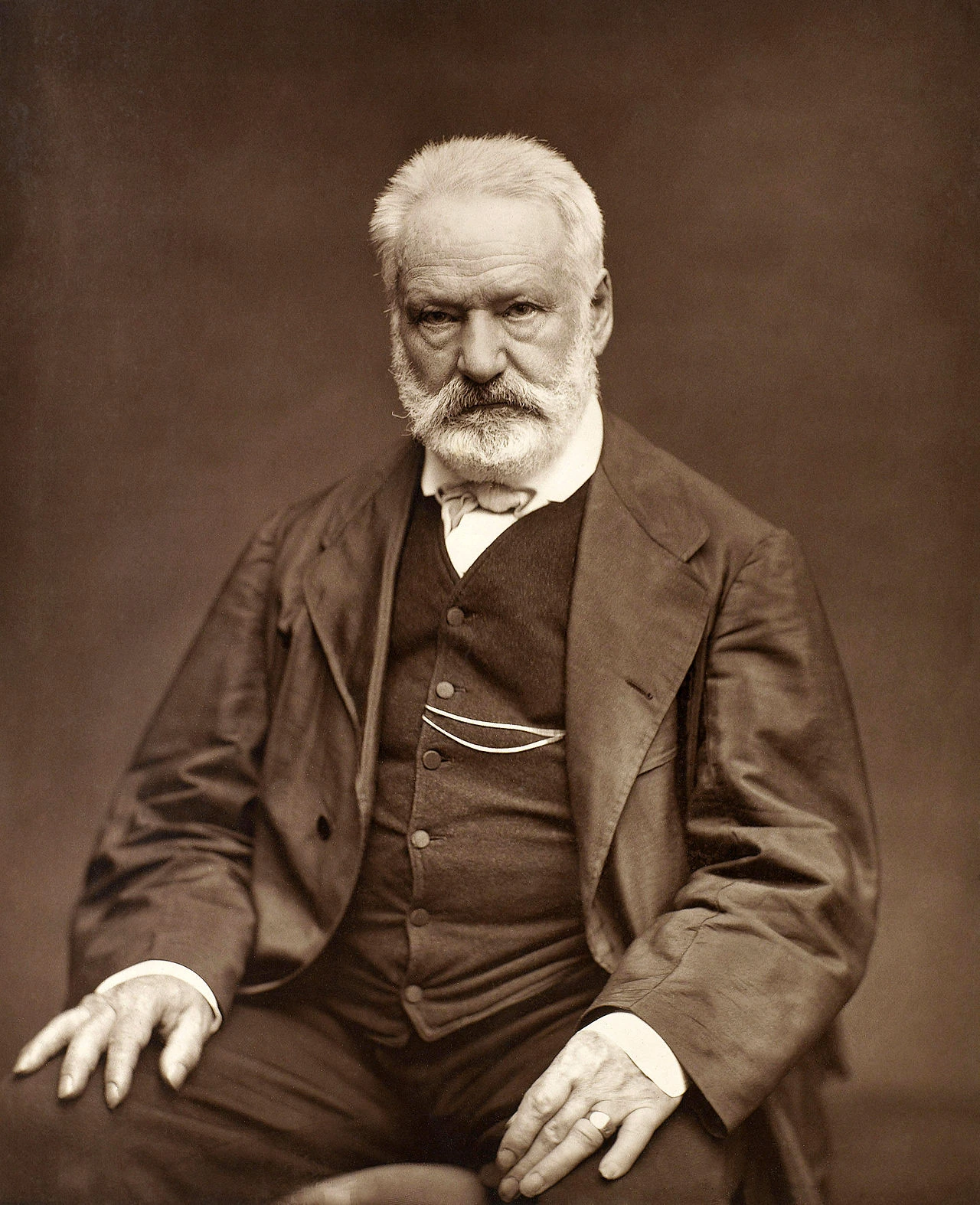
Which Victor Hugo are we talking about?

This is the first thing to pin down before trusting any number you find. At least two well-documented people share this name, and search results frequently mix them together.
| Person | Born–Died | Known For | Relevant to This Article? |
|---|---|---|---|
| Victor-Marie Hugo | 1802–1885 (French) | Author of Les Misérables, Notre-Dame de Paris, major French poet and playwright | Yes — this is the subject |
| Victor Hugo (born Victor Rojas) | 1948–1994 (Venezuelan-American) | Window dresser, artist, partner of fashion designer Halston | No — separate person |
The Venezuelan-American Victor Hugo sometimes surfaces alongside searches related to Halston's net worth and fashion industry wealth. If you landed here looking for that Victor Hugo, his financial profile is covered separately on this site. If you are specifically looking for the victor gomes net worth topic, that coverage is linked separately as well his financial profile is covered separately on this site.
If you are specifically trying to find Victor Boschini net worth, note that search results can blend different people with the same first and last names, so the safest approach is to check the cited sources his financial profile is covered separately on this site.. If you are specifically looking for victor campenaerts net worth, this article focuses on Victor Hugo and does not use any Campenaerts estate details.
For everyone else, the rest of this article is about the 1802–1885 French writer. Some readers search for victor callewaert net worth instead, but that refers to a different person from Victor Hugo.
How net worth estimates actually get built (and why they always come in ranges)
Net worth is assets minus liabilities, full stop. The problem with historical figures is that nobody has a complete balance sheet for them. For a living public figure, you can pull property records, corporate filings, disclosed salaries, and reported investment holdings. For Victor Hugo, who died 141 years ago, the raw inputs are fragmentary: estate inventories, documented publishing contracts, known charitable bequests, and occasional references in contemporary biographies. Anything beyond that requires assumptions.
The second reason estimates come in ranges is currency conversion. Hugo earned in 19th-century French francs. Converting those to modern dollars requires choosing a methodology: simple inflation adjustment, GDP per capita comparison, or labor-value equivalence. Each method produces a meaningfully different number, which is why you will see figures ranging from around $10 million to $30 million depending on the source and its methodology. Neither extreme is necessarily wrong; they just reflect different conversion assumptions.
For any historical figure, the honest answer is always a range, not a precise dollar figure. Any site that gives you a single clean number like "$12,000,000" without explaining the conversion method should be treated with skepticism.
The best current estimate for Victor Hugo's net worth

The most grounded starting point is the estate figure: roughly four million francs at the time of his death in 1885. This figure appears in biographical and historical sources discussing Hugo's final will and estate disposition. Converting four million 1885 French francs to modern USD using a purchasing-power-parity approach yields an approximate range of $15 million to $25 million in today's money. The midpoint of around $20 million is a reasonable working estimate, but treat any single number here as an order-of-magnitude figure rather than a precise valuation.
It is worth stating clearly: no reputable net-worth aggregator has published a well-sourced, methodology-disclosed estimate for Victor Hugo as of May 2026. Because victor borge net worth is a modern, living-person style topic, it is a completely different kind of wealth discussion than Victor Hugo's estate-based estimates. Most results that appear in search engines either conflate him with the Venezuelan-American artist, rely on undisclosed sourcing, or simply repeat other sites' figures without verification. The four-million-franc estate figure is the most concrete number available from primary-adjacent sources.
Where Hugo's money came from
Understanding the income side helps explain how a 19th-century writer accumulated a fortune of that scale. Hugo's earnings came from several distinct categories, and the structure of those deals matters for any wealth reconstruction.
Publishing contracts and lump-sum advances

Hugo's contracts were generally structured as lump-sum payments or time-limited licenses rather than ongoing per-copy royalties in the modern sense. The most dramatic example is Les Misérables: he reportedly received around 300,000 francs for the publication rights, a figure cited repeatedly in literary history and representing an extraordinary sum for the era. To put it in context, 300,000 francs in the 1860s would be roughly equivalent to several million dollars today. A single contract of that size moved the needle significantly on his lifetime wealth.
Earlier in his career, the numbers were smaller but still substantial. Historical sources record a payment of blank" rel="noopener noreferrer">40,000 francs for a collection of poems (Chansons des rues et des bois), which indicates Hugo commanded high advances even for work that was not among his most commercially famous. Because these were lump-sum deals, his wealth depended on how well he preserved and invested those payments over time, not on a steady royalty stream.
Theater income
Hugo was also a prolific playwright, and theatrical productions generated separate income streams. Plays like Hernani and Ruy Blas had significant runs at major Parisian theaters. Theater earnings in this period could be substantial, though they were less predictable than publishing advances and are harder to reconstruct from surviving records.
State honors, pensions, and political life
Hugo held a seat in the Académie française and later served as a senator under the Third Republic. State positions and honors of this kind came with stipends and symbolic income, though these were not the primary drivers of his wealth. His long political exile from France (1851–1870 under Napoleon III) likely disrupted some income streams while he continued writing from Guernsey.
What's included in the estate figure (and what isn't)

When sources reference the "four million franc" estate, that figure represents the gross estate value at death, not a net worth calculation in the modern sense. Here is what was likely included and excluded.
| Category | Included in Estate Figure? | Notes |
|---|---|---|
| Cash and financial assets | Likely yes | Accumulated from publishing and theater contracts |
| Property and real estate | Likely yes | Including his residence(s) in France |
| Intellectual property / future royalties | Unclear | 19th-century estate law handled IP inconsistently |
| Charitable bequest (50,000 francs to the poor) | Subtracted from heir inheritance | Stipulated in his will; reduces transferable estate |
| Inheritance allocations to family | Gross estate divided among heirs | Half reportedly to Adèle, shares to grandchildren Jeanne and Georges |
| Debts and liabilities | Should be subtracted, but detail is unavailable | Net estate figure would require subtracting any outstanding debts |
| Modern royalty streams (posthumous) | Not included | Post-1885 royalties went to heirs, then entered public domain |
The charitable bequest is worth flagging specifically. Hugo's will stipulated 50,000 francs to the poor, which is confirmed across multiple biographical sources. That comes directly off the top before heirs receive anything, and it is a concrete example of why "estate value at death" and "net worth transferred to family" are two different numbers.
How Hugo's wealth built up over time
Rather than a single net worth snapshot, it helps to think about Hugo's financial life in phases. Here is a rough timeline of the major periods.
- 1820s–1830s (Early career): Hugo established himself as a poet and playwright. Income was modest by later standards but growing. Early successes like Hernani (1830) built his reputation and negotiating power with publishers and theaters.
- 1840s (Peak influence, pre-exile): Hugo was elected to the Académie française in 1841 and was at the height of his Paris-based prestige. Contract values were rising. This period likely saw significant accumulation before the political rupture.
- 1851–1870 (Exile period): Napoleon III's coup forced Hugo into exile, first to Brussels, then to Jersey, then Guernsey. He continued writing prolifically — Les Misérables was published in 1862, generating the landmark ~300,000-franc payment — but political exile created logistical complications for French income.
- 1862 (Les Misérables publication): The single largest documented income event. The ~300,000-franc advance was a transformational payment that almost certainly anchored the bulk of his final estate value.
- 1870–1885 (Return to France, late career): Hugo returned to Paris after the Franco-Prussian War and the fall of the Second Empire. He was elected Senator in 1876. Late-career works added additional contract income but probably at lower scale than the Les Misérables peak.
- 1885 (Death and estate): Estate estimated at ~4 million francs. Will specified 50,000 francs to the poor, with remaining assets split among Adèle and grandchildren.
How to verify this number today and keep it updated
Because Hugo is a historical figure, the "net worth" figure itself will not change based on new business deals or market movements. Some readers also look up Victor Campenaerts net worth, but that is a different exercise for a living athlete with available public records. But the estimate can and should be updated when better sources surface, when currency conversion methodology improves, or when new biographical research publishes estate details more precisely. Here is the practical workflow.
- Confirm you have the right person: Search with the full name "Victor-Marie Hugo" and dates 1802–1885 to filter out results about the Venezuelan-American artist Victor Hugo (1948–1994). This is the single most common contamination problem in this research.
- Find the estate figure in biographical sources: Look for references to Hugo's will and estate in reputable biographies (Graham Robb's Victor Hugo biography is a well-regarded English-language source) or in scholarly articles about 19th-century French literary finances. The ~4 million franc figure should be cross-checkable there.
- Check the charitable and inheritance allocations: Confirm the 50,000-franc bequest to the poor and the allocation splits among heirs. These affect what the estate figure actually represents as transferable wealth.
- Apply a currency conversion with disclosed methodology: Use an established historical currency tool (such as measuringworth.com, which offers multiple conversion methods) and note which method you used. Report the result as a range, not a single number.
- Check for new biographical research: Google Scholar searches for "Victor Hugo finances" or "Victor Hugo contrats d'édition" (in French) can surface recent academic work that may refine the income or estate figures.
- Flag the date of your estimate: Any net worth figure for a historical figure should be dated to when you last verified the conversion. Inflation and exchange rate methodology does shift, so an estimate verified in May 2026 may differ slightly from one done in 2028.
One practical note: most net worth aggregator sites that list Victor Hugo do not disclose their methodology, source their figures from other aggregator sites in a circular way, or conflate him with other people named Victor Hugo. Cross-referencing against primary biographical sources and documented contract figures (especially the Les Misérables payment) is the only reliable way to sense-check any number you find. If you're specifically looking for Victor Goossens net worth, treat any figure you see as unverified until it is backed by transparent sourcing.
Putting the number in context
A working estimate of $15 million to $25 million in today's money makes Victor Hugo one of the wealthiest literary figures of the 19th century in France, but it is a modest figure compared to modern entertainment or business wealth. If you are also looking at Victor Callewaert net worth, the approach is similar but the available records are very different because he is a modern public figure.
For perspective, it reflects a career in which a handful of blockbuster contracts (most importantly Les Misérables) generated lump-sum payments that were preserved rather than reinvested in income-generating assets in any sophisticated modern sense. His wealth was built through the pen and accumulated over six decades of productive writing, political survival, and contract negotiation, which is itself a remarkable financial story for a 19th-century author.
Other Victors tracked on this site, including figures in sports and business, tend to have more transparent and directly verifiable wealth profiles precisely because modern financial disclosure requirements and public records didn't exist in Hugo's era.
FAQ
Why do websites disagree so much on Victor Hugo’s net worth (and do any of them have it right)?
If a site claims a single exact “net worth” number for Victor Hugo, treat it as conversion branding rather than accounting. For Hugo, the most defensible starting point is the estate value at death (about four million francs), then apply a clearly stated conversion method (such as purchasing-power parity). Without that method, you cannot tell whether the figure is using inflation, GDP per capita, or another equivalence that leads to very different outcomes.
Does the “four million francs” estimate equal what his heirs actually got?
Yes. Even when the “four million francs” figure is accepted, the charity and other top-of-estate deductions can reduce what heirs actually received. The article flags a 50,000 franc bequest to the poor, which means any “estate-to-family” number must subtract items like charitable gifts and other specified obligations before you compare it to modern “net worth transferred to family.”
How much did Les Misérables and other contracts contribute to the size of his estate?
The largest single contract is the Les Misérables publication rights, commonly cited around 300,000 francs, delivered as a lump sum. That matters because lump sums depend heavily on what he chose to preserve and how well he held onto capital over time, rather than producing a steady annual royalty stream. So two people with similar lifetime earnings could end with different estate values if one reinvested differently or had bigger deductions.
What else besides currency conversion makes Victor Hugo’s wealth estimates vary (even if the francs figure is the same)?
Most estimates are not only sensitive to currency conversion, they are also sensitive to what portion of the estate is included (gross estate value versus post-deduction amounts) and to whether the source treats publishing income as disposable cash versus capital held in assets. That is why you will see a wide band rather than a tight number, and why “midpoint” figures like around $20 million should be treated as an order-of-magnitude working estimate.
How can I tell if a Victor Hugo net worth result is about the author (1802–1885) or someone else?
Be careful about mixing “Victor Hugo” with other similarly named people, because modern net worth pages often use undisclosed aggregation that can accidentally or intentionally cross-contaminate figures. A practical check is to look for contextual anchors that only fit the 1802–1885 French author, such as references to Les Misérables contract payments or the Académie française and the Third Republic senatorial role.
If I want to verify a Victor Hugo net worth claim, what details should I look for first?
The best evidence tends to be estate-related disclosures (lists of assets at death, will provisions, and biographical summaries grounded in historical documentation) plus major contract figures. For sanity-checking, prioritize sources that specifically mention the Les Misérables rights payment and the charitable bequest structure, because those are concrete anchors that most unsourced aggregator pages cannot reproduce responsibly.
Is Victor Hugo’s “net worth” supposed to represent his wealth in today’s markets or just today’s equivalent of his estate at death?
If a “net worth” number is presented as current, investable wealth, that framing is misleading for a deceased 19th-century author. His economic “snapshot” is essentially at death, and market movements after his death are irrelevant. A useful alternative framing is “estate value in today’s purchasing power,” which is what the $15 million to $25 million band is intended to approximate.
What would actually make Victor Hugo net worth estimates change over time?
New research can refine the estimate, but it would usually change the valuation via better estate inventories, clearer deductions, or more precise identification of contract terms and amounts, not via any new business activity by Hugo. So updates are most meaningful when a biographical study improves the underlying primary-adjacent numbers or provides a more defensible conversion rationale.
Why do some estimates focus more on publishing than on theater or politics?
Yes, theater income and political roles can appear in discussions, but they are usually harder to reconstruct accurately than lump-sum publishing rights. Theater earnings also fluctuate by run length and audience performance, and state stipends are not typically the main driver of the large estate figure. So for most reconstructions, the core “wealth engine” is publishing contracts preserved into his later life.
Next Articles

Victor Gomes Net Worth: How to Estimate From Evidence
Estimate Victor Gomes net worth using public earnings, contracts, endorsements, assets, and clear range-based calculatio

Victor Moses Net Worth 2026: Estimate Range and How to Verify
Victor Moses net worth 2026 estimate range, income sources, and quick steps to verify and cross-check claims.
Victor Borge Net Worth: What’s Known, Estimated, and Why
Victor Borge net worth breakdown: known facts vs estimates, income sources, why figures differ, and how to verify.