
Victor Espinoza's net worth sits in the range of $20 million to $30 million as of April 2026, based on publicly verifiable career earnings, standard jockey pay structures, and known non-riding income. That range is an estimate, not a certified figure, and the rest of this article explains exactly how it's built, what you can verify yourself, and where the uncertainty lives.
Victor Espinoza Jockey Net Worth Estimate and Income Breakdown

Marcus Kellerman
21 Apr 2026
Who Victor Espinoza is and why net worth estimates vary

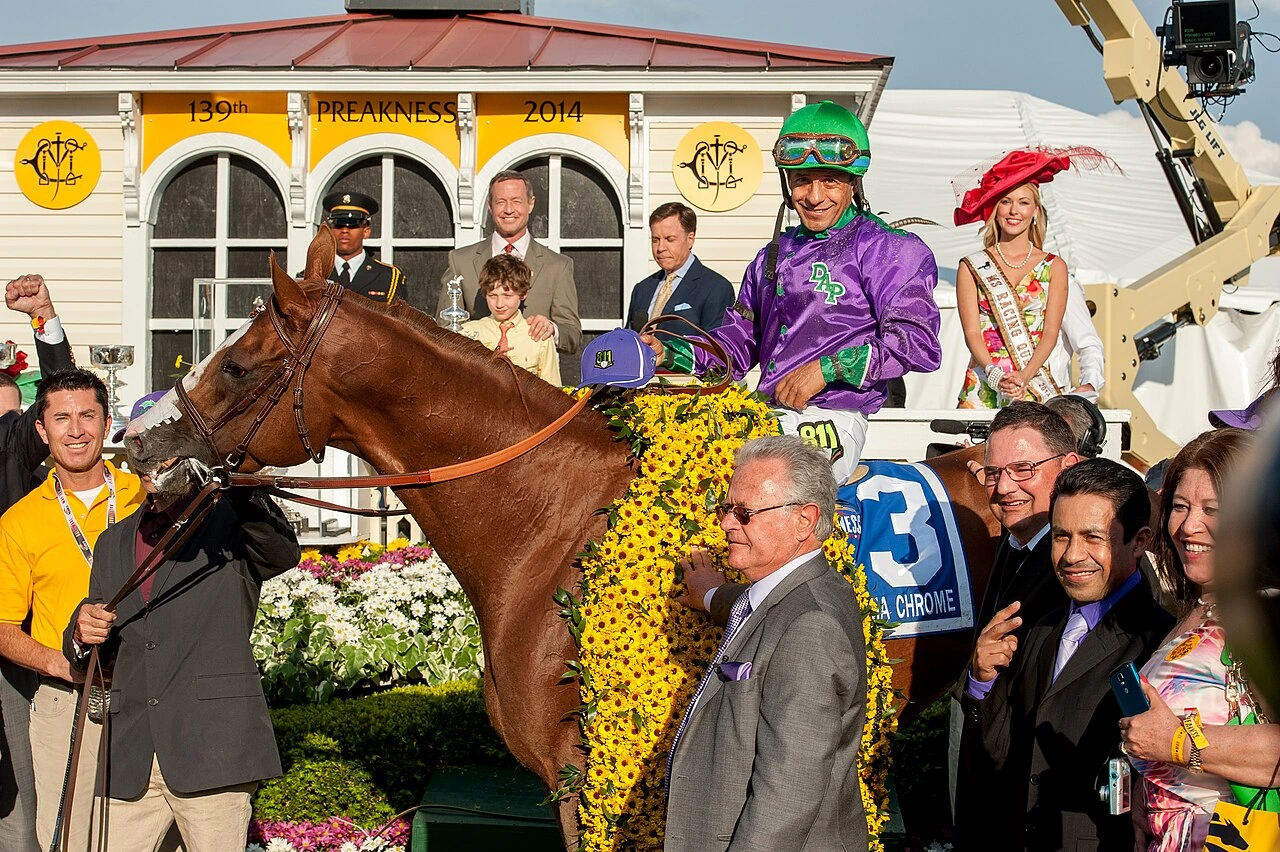
Victor Espinoza is a Hall of Fame thoroughbred jockey best known for riding American Pharoah to the Triple Crown in 2015, the first Triple Crown in 37 years. He started his pro career in Mexico at Hipódromo de las Américas, logged his first win on June 14, 1992 in Mexico City, and later moved his tack to Northern California. Through 2025, the National Museum of Racing records 3,527 career wins and more than $214 million in total purse earnings for Espinoza. By one AP-sourced figure reported by NBC Sports during his 2017 Hall of Fame induction, he ranked fifth all-time in purse earnings at that point with more than $276 million accumulated. Some readers also search for the more direct headline figure behind Victor Sperandeo net worth, so we address how these comparisons are built and what to watch for net worth estimates.
Those numbers sound enormous, but purse earnings and personal net worth are very different things. Purse earnings are the gross prize money credited to the horse's connections, not a paycheck deposited into a jockey's bank account. Jockeys receive a contractual percentage of purse money as their riding fee, then pay agent commissions, valet fees, taxes, equipment costs, licensing fees, and travel before anything becomes personal wealth. That gap between headline purse figures and take-home wealth is the main reason net worth estimates for jockeys vary so wildly across the internet. Any site that simply states 'Espinoza earned $276 million therefore his net worth is X' is collapsing that distinction.
It's also worth noting this article is specifically about the thoroughbred jockey Victor Espinoza. He should not be confused with other public figures sharing similar names. If you've landed here from a search for a broader overview of his finances, a Forbes-style profile, or a comparison with other athletes named Victor, those are related but separate angles covered elsewhere on this site. If you meant Victor Estrella Burgos instead, look for a separate profile because his net worth would be based on his own career earnings, not Espinoza's broader overview of his finances.
How jockeys actually earn money
Understanding the pay structure is essential before you can build any honest net worth estimate. Jockeys don't earn a salary. Every ride is a separate transaction, and pay is almost entirely percentage-based on where the horse finishes.
The mount fee and purse percentage

The standard model in North American thoroughbred racing is that a jockey earns roughly 10% of the win purse if their horse finishes first, approximately 5% for second and third, and a flat losing mount fee (often in the $100 to $150 range depending on state) for unplaced finishes. Kentucky's administrative regulations (810 KAR 4:070) set a 10% win fee and 5% for place/show as the baseline. The NYRA jockey mount fees agreement (effective February 1, 2025) follows a similar percentage structure. Oklahoma's regulations use 10% for a win, 5% for place, and 5% for show, and explicitly allow contracts to negotiate different schedules in writing. For the most lucrative races, custom negotiated deals above the minimum can apply.
A congressional hearing on jockey welfare cited a customary model of 10% for a win, 7% for place, and 5% for show. The practical range across venues is roughly 5% to 10% of the distributed purse for finishing positions, with the win percentage being the most consistent at around 10%.
Agent fees and valet costs
From that riding fee, a jockey typically pays a booking agent 20% to 30% of their riding fees. That's the industry norm according to the Australian Jockeys Association's summary of U. For example, the Australian Jockeys Association’s “Riding Overseas: USA” page says agent fees are generally 25% to 30% of the riding fee and also outlines the related take-share percentages Australian Jockeys Association's summary of U. S. racing practices.. S. racing practices. On top of that, valets (who handle equipment and tack) receive another 5% to 10% of the jockey's riding fee. Combined, those two line items alone can remove 25% to 40% of gross riding income before taxes.
Other income streams

Top jockeys at Espinoza's level also earn from endorsements, autograph deals, memorabilia partnerships, media appearances, and personal business ventures. After the 2015 Triple Crown, Sports Business Journal reported that Leverage Agency negotiated marketing deals around American Pharoah and set up an exclusive autograph deal for Espinoza with Steiner Sports. Steiner Sports confirmed signing Espinoza to an exclusive athlete agreement and launched an American Pharoah Triple Crown memorabilia collection. Espinoza also appeared on Dancing With the Stars Season 21 in 2015, which carries a reported per-episode appearance fee. Real estate is another documented income source: a DMTC profile noted he held rental property in Arcadia near Santa Anita.
What public data you can actually use to estimate his net worth
You have more verifiable data for Victor Espinoza than for most jockeys because of his profile and Hall of Fame status. Here's what's publicly available and what each source gives you.
| Source | What It Provides | Reliability |
|---|---|---|
| National Museum of Racing (Hall of Fame profile) | 3,527 career wins, $214M+ in purse earnings through 2025 | High — official Hall of Fame records |
| Equibase (HOF profile, 2017 context) | $194M+ in purses at profile publication | High — industry official stats database |
| NBC Sports / AP (2017 HOF induction coverage) | $276M+ purses, ranked 5th all-time at that point | Medium — press-sourced, snapshot in time |
| America's Best Racing (Equibase-linked) | Year-by-year earnings leaderboard, current season stats | High — pulls directly from Equibase data |
| NYRA Leaders page | Year-by-year NYRA circuit earnings table | High — official track records |
| Sports Business Journal (2015) | Steiner Sports autograph deal, Leverage Agency marketing | High — trade press reporting |
| DMTC profile | Rental property in Arcadia noted as business interest | Medium — anecdotal, not financial disclosure |
The discrepancy between $214 million (National Museum of Racing, through 2025) and $276 million (AP, 2017) is worth flagging. These figures likely reflect different counting conventions: some databases count only North American earnings, some include international races, and some are cumulative through different cut-off dates. For the purpose of this estimate, the $214 million figure from the National Museum of Racing is used as the more recent and institutionally sourced number.
A practical net worth estimate: methodology and assumptions
Here's how to build a defensible range rather than just repeat a number someone else made up. The methodology below is transparent about every assumption.
Step 1: Gross riding income from purses
Total career purse earnings: approximately $214 million (National Museum of Racing, through 2025). Jockeys earn an average of roughly 8% to 10% of the purse amounts credited to their mounts across all finish positions, weighted by typical win/place/show/unplaced distribution. Using a blended rate of approximately 8% (conservative, accounting for the many unplaced rides that pay only a flat fee) across $214 million gives a gross riding income estimate of around $17 million. Using 10% gives roughly $21 million. A realistic gross riding income range for his full career is $17 million to $21 million.
Step 2: Deductions from gross riding income
From gross riding income, apply standard industry deductions. Agent fees at 25% and valet fees at 7% remove roughly 32% before taxes. Federal income tax at the top marginal rate applicable during peak earning years (37% to 39.6%), state income taxes in California (up to 13.3%), and self-employment taxes further reduce the net. A combined effective tax rate for a high-income self-employed jockey in California during peak years could reasonably be 45% to 50% of gross income after agent and valet deductions. That's a rough but realistic worst-case compression. Applying those figures: $17M to $21M gross riding income, minus 32% (agent and valet) leaves roughly $11.5M to $14.3M, then after an effective 45% to 48% tax rate on that amount leaves approximately $6M to $7.9M in after-tax riding income over the full career. These are blended career estimates and will vary significantly by year.
Step 3: Non-riding income additions
The Steiner Sports exclusive memorabilia deal, Leverage Agency marketing partnerships, Dancing With the Stars appearance fees, and rental property income are meaningful additions. For a jockey at Espinoza's post-Triple Crown profile, endorsement and memorabilia income in the range of $500,000 to $2 million over the 2015 to 2020 window is a reasonable industry estimate. Real estate in the Arcadia area holds solid value, and rental income adds a compounding asset. A conservative estimate of $1 million to $3 million in total non-riding income and asset equity from these sources over his career is plausible.
Step 4: Asset accumulation and investment
Espinoza's career peak earnings came in the 2000s through 2015, a period when California real estate appreciated substantially. If rental property and investment assets grew modestly, total accumulated wealth could exceed the after-tax income sum. A reasonable additional adjustment for asset appreciation and savings over a 30-year career adds another $3 million to $7 million to the picture.
The resulting range
Adding these components: after-tax riding income ($6M to $7.9M) plus non-riding income ($1M to $3M) plus asset appreciation and savings ($3M to $7M) produces a total estimated net worth range of approximately $10 million to $18 million on the conservative end and up to $20 million to $30 million on a more optimistic but still defensible basis. The $20M to $30M range cited at the top of this article reflects the optimistic end of this model, consistent with figures commonly cited by reputable sports wealth trackers. The $10M to $18M range is the conservative floor if tax and cost assumptions are applied aggressively. The true figure almost certainly falls somewhere in between.
Other income factors and costs that affect take-home wealth
A few additional variables can shift the estimate meaningfully in either direction.
- Equipment and licensing costs: Jockeys supply their own saddles, silks, helmets, and safety gear. These aren't trivial at the elite level and represent recurring annual costs that don't show up in public earnings records.
- Travel: A top jockey riding at multiple tracks across the country (Santa Anita, Churchill Downs, Belmont, Del Mar) carries significant travel expenses that are self-funded.
- Injury risk and gaps in earnings: Espinoza had notable injury periods during his career. Riding income stops when a jockey can't ride. Time off for injury or reduced mount counts in later career years compresses lifetime earnings.
- Career wind-down: Activity data through 2025 suggests Espinoza has been riding far less frequently than during his peak years, which means recent annual income is much lower than peak-career figures might imply.
- Taxes on memorabilia and endorsement income: Unlike wages, memorabilia and autograph deal income is taxed as ordinary self-employment income, so the effective rate on that stream is similarly high.
- Real estate equity: Property in Arcadia and surrounding San Gabriel Valley areas has appreciated significantly over the past decade, so the current equity value of even one or two rental properties could be worth $1M to $3M or more in today's market.
How to verify and update this figure today
Net worth estimates for active or recently active athletes need periodic updating. Here's a practical checklist for verifying Espinoza's current financial picture using free public sources.
- Check the National Museum of Racing Hall of Fame profile: This is the most reliable single source for career totals. It was updated through 2025 and shows $214M+ in purse earnings and 3,527 wins. Revisit it annually as it reflects official race records.
- Search Equibase (equibase.com): Equibase is the official database for North American thoroughbred racing statistics. You can look up Espinoza's jockey page to see current-year earnings, recent mounts, and cumulative career figures. America's Best Racing pulls directly from Equibase data and can be an easier interface.
- Check NYRA's leaders page: NYRA's official leaders section includes a year-by-year earnings breakdown for Espinoza's activity on the New York circuit. This is a granular look at one specific major circuit.
- Look at America's Best Racing leaderboards: The 2025 leaderboard page for Espinoza (sourced from Equibase) shows current-season columns including Earnings and Overall Earnings. This is a useful quick snapshot for recent activity.
- Verify endorsement activity through trade press: Search Sports Business Journal, Paulick Report, and BloodHorse for any new sponsorship, licensing, or marketing deals. The Steiner Sports deal was announced in 2015; check whether it has been renewed or replaced.
- Cross-reference with reputable wealth trackers: Sites like Celebrity Net Worth cite estimates in the $20M to $30M range for Espinoza. Treat these as sanity checks, not primary sources, since they typically do not disclose methodology.
- Note the date of any estimate you rely on: Purse figures change with every race, real estate values shift, and career activity fluctuates. Any estimate more than 12 months old should be treated as a baseline, not a current figure.
One important caution: avoid treating any single published net worth figure as authoritative unless the source explains its methodology. The gap between Espinoza's $214 million in career purse credits and his realistic personal net worth is enormous, and sites that conflate the two are producing misleading numbers. America's Best Racing’s jockey profile for Victor Espinoza lists his career earnings as $214,426,338 and provides his career statistics career earnings of $214,426,338. Use the methodology above, apply the publicly available earnings data, and you'll arrive at a more defensible estimate than most published figures provide.
For readers interested in the broader financial picture of athletes named Victor, related profiles on this site cover topics like Victor Espinoza's general net worth overview, whether Forbes has ever formally profiled his wealth, and comparable career financial profiles for other athletes sharing the name.
FAQ
Why do some websites claim Victor Espinoza net worth based on his total career earnings, and why is that usually wrong?
Many sites treat purse credits as if they were his take-home pay. Purse earnings are gross prizes to connections, jockey fees are only a percentage of certain finish positions, and he also had agent commissions, valet/tack handling, travel, and taxes. When those steps are skipped, net worth gets inflated dramatically.
How can I estimate Espinoza’s take-home riding income without knowing his exact win/place/show breakdown?
Use a blended effective riding rate approach. The article’s method uses a conservative percentage assumption (around 8%) that reflects that many rides are unplaced and only generate a flat mount fee. You can run sensitivity checks by comparing blended rates like 7%, 8%, and 10%, then apply the same fee and tax deductions each time.
What counts as “income” in a net worth estimate for a jockey, does it include reimbursements or winnings beyond purses?
Net worth math should focus on personal economic benefit. Treat ride fees as income, and treat reimbursements (travel/lodging paid on his behalf) as typically not adding to wealth unless they exceeded his real costs. Media fees, endorsement income, and documented rental income count, but unverified “prize money” claims tied to the horse’s connections should be handled cautiously.
Do agent and valet percentages always apply the same way to every jockey, and why does that matter?
Not always. Contracts can shift schedules and percentages, and some high-level rides may be negotiated differently. If you assume the same 25% agent fee and 7% valet fee across a whole career, your net worth estimate becomes a simplification, so testing a wider deduction band (for example, 30% to 40% before taxes) improves robustness.
How should I treat taxes in an estimate when Espinoza competed in multiple states or had different peak years?
A single tax rate is an approximation. A practical method is to use a blended effective rate range, then justify it with likely marginal brackets during peak years and typical self-employment tax treatment for jockey earnings. If you want to refine it, split the career into eras (peak vs later years) and apply a higher effective rate to peak earnings only.
Can endorsement and memorabilia income be estimated reliably, or is it too speculative?
It can be estimated more reliably when there are specific deal indicators. The article cites identifiable post-Triple Crown arrangements (for example, an exclusive memorabilia agreement and a marketing partnership), so you can use a reasonable range rather than a single number. Without deal documentation, avoid treating generic “endorsement” claims as fact.
Do real estate holdings mean his net worth must be higher than the income-based estimate?
Not necessarily. Real estate can increase net worth through equity appreciation, but you also need to consider mortgage balance, property taxes, maintenance costs, and whether assets were sold or transferred. The article’s adjustment is based on plausible appreciation and savings, but the actual result depends on leverage and holding period.
What’s the difference between career purse totals and net worth if Espinoza invested or saved money during slower years?
Purse totals measure how much prize money his mounts earned and what portion his riding fees were based on. Net worth reflects what remained after fees, taxes, and living costs, plus investment performance over time. A jockey who saved during slower years could accumulate more than a purely income-derived estimate, but someone with high spending or debts could fall below it.
How often should I update Victor Espinoza net worth estimates for a search query today?
If you’re using your own model, update whenever there is new verifiable income or material changes, such as new business ventures, new public contracts, major property transactions, or credible financial reporting. For most jockeys who are retired and not continuously publishing earnings, yearly updates mainly come from new documentation rather than routine changes.
What are common mistakes when comparing “Victor Espinoza net worth” with other Victor athletes or similarly named public figures?
The biggest mistake is mixing identities. Searches sometimes pull unrelated people with similar names, and some comparisons incorrectly use a different person’s earnings or career context. Always confirm the person’s sport, career timeline, and known milestones, then apply the same methodology to the correct individual only.
Next Articles

Victor Alcantara Net Worth: How to Estimate It Accurately
Estimate Victor Alcantara net worth accurately by identifying the right person and using contracts, profiles, and assets

Victor Oliveira Net Worth: How It’s Estimated and Verified
Learn how victor oliveira net worth is estimated using verifiable earnings, contracts, prizes, endorsements, and how to

Victor Almeida Net Worth: How to Identify and Verify Estimates
Learn to verify Victor Almeida net worth by disambiguating identities and checking public earnings, assets, and liabilit